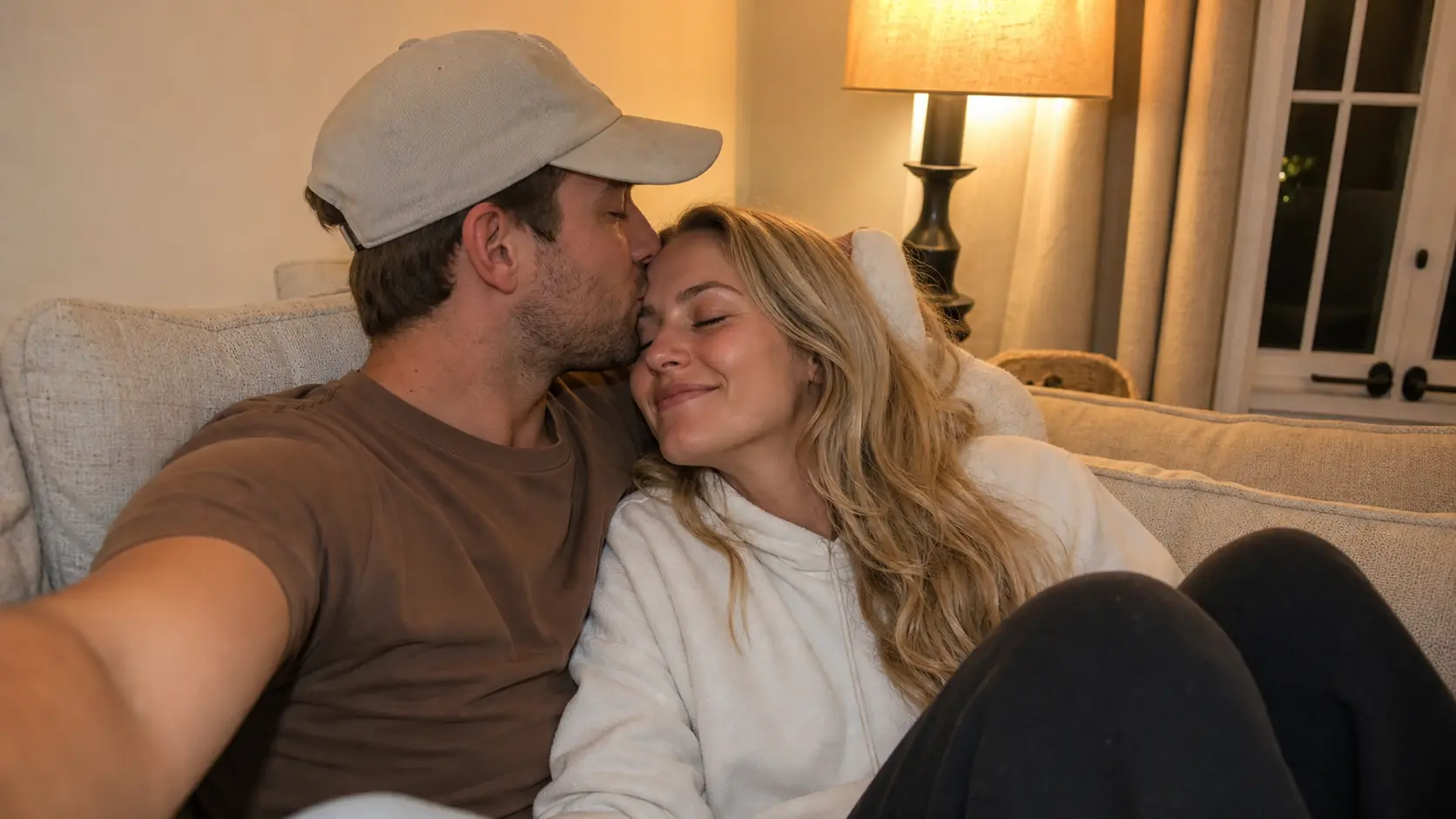
A 2018 UK survey of 1,000 men commissioned by bathroom retailer Pebble Grey found that roughly one in three use the bathroom as a place to hide from the rest of the household. Across a year, those small acts of escape add up to about seven hours of locked-door solitude. The number is small. The pattern behind it is not.
Psychologists who study time alone have spent the last decade pulling apart what people are really doing when they slip away. Their finding, in plain language, is that quiet, self-chosen solitude tends to help mood and recovery, while solitude that feels forced does not.1 The bathroom, as it turns out, is just where modern domestic life happens to leave the lock on the door.
What did the UK survey actually find?
The Pebble Grey poll asked 1,000 British men about how they used their bathrooms. About 33 percent said the bathroom was their exclusive place for being on their own. Around 23 percent went further and called it their “safe place.” One in four said these breaks felt essential for getting through the day. The survey also reported that about one in ten bathroom visits gets interrupted, which works out to roughly 171 interruptions per man per year, and that women reported using the bathroom this way at about half the rate of men, closer to one in five.
None of this is peer-reviewed research. It is a consumer survey, run by a company that sells bathroom mirrors, on a self-selected sample of UK adults. Treat the percentages as a snapshot of a particular moment in a particular country, not as a settled fact about all men everywhere. The reason the survey caught on, though, is that the underlying behavior matches what better-designed studies have been finding for years.
Why hide in the bathroom at all?
The bathroom is one of the very few rooms in a typical home where closing the door without explanation is socially acceptable. You do not need to announce that you are taking a break. You do not need to negotiate. The plumbing does the explaining for you. For someone who lives with a partner, kids, flatmates, or aging parents, that simple structural fact turns the bathroom into the path of least resistance for getting a few uninterrupted minutes.
What people do with those minutes is not, mostly, dramatic. The Pebble Grey respondents described scrolling their phones, escaping household chores, taking a breather from childcare, and stepping out of the conversational stream of the household. The original post that started this discussion put it bluntly, calling these moments “essential for managing life’s demands.” That phrase is not just venting. It maps onto a real construct in occupational psychology called psychological detachment, which describes the experience of mentally stepping away from work and demands during off-time.5
What the research says about choosing to be alone
The most useful study to read alongside the survey is a 2024 paper by Adams and Weinstein in the British Journal of Social Psychology. Across daily diary data, they found that solitude contexts contributed to well-being on their own, especially when people felt the time alone was their own choice rather than imposed.1 The takeaway is small but specific. Time by yourself can satisfy basic psychological needs, including autonomy, in a way that complements time with other people instead of competing with it.
A 2020 study by Lay and colleagues, published in the Journals of Gerontology, looked at midlife and older adults and asked when they sought out time alone. Their answer was that solitude-seeking was tied to specific moments rather than a stable trait. Adults reached for it more often after social effort, after stress, and when they wanted to recharge before the next round of demands.2 The pattern looks a lot like the one the UK survey describes, except the bathroom door is replaced by a study, a garden, or a quiet drive.

Coplan and colleagues, working in developmental psychology, have spent years showing that not all aloneness is the same. In a 2013 paper in Developmental Psychology, they distinguished children who avoided peers from children who simply enjoyed time on their own, and found that the latter group did not show the social or emotional difficulties of the former.3 Later work in the Journal of Youth and Adolescence extended that idea, arguing that adolescents need a balance, with too little solitude and too much both carrying costs.3 The point that keeps showing up across these papers is that solitude works when it is chosen, and stops working when it slides into withdrawal.
It is not just one study
Weinstein, Nguyen, and Hansen ran a 2021 qualitative study in Frontiers in Psychology that interviewed people from adolescence into older adulthood about what time alone gave them. The themes that came back were strikingly consistent. Participants described solitude as a place to think clearly, regulate emotion, recover from social effort, and reconnect with their own preferences and values.4 Younger participants emphasized identity work and creativity. Older participants emphasized peace and a sense of being themselves without performing.
Sonnentag and colleagues, working in occupational psychology, have shown that the way people spend their evenings predicts how they sleep and how they feel the next day. Their day-level study in the Journal of Applied Psychology found that recovery experiences in the evening, including psychological detachment from work, were associated with better sleep quality and more positive affect the following morning.5 Recovery, in their framing, is not a luxury. It is a working part of how the next day starts.
Why men in particular?
The gender gap in the survey, with about a third of men but only a fifth of women reporting bathroom refuge, is the most quoted bit of the original post. It is also the part that needs the most caution. A consumer survey cannot tell you whether men need more solitude than women, whether they have less of it elsewhere, or whether they are simply more likely to admit to hiding in the bathroom on a poll. All three are plausible.
The research that does exist on gendered patterns of recovery and household labor offers a few hints. In many heterosexual households, women still carry more of the cognitive load of running the home, which means fewer moments where stepping away is socially uncontested. Men, on average, may also have fewer same-gender confidants in adulthood, which can leave a thinner network for emotional offloading. None of that is settled. It is the sort of context that makes a 33 percent figure plausible without making it definitive.

Phones, doors, and the modern bathroom break
Smartphones are the quiet co-author of the seven-hours number. A 2017 Vioguard survey reported that around 75 percent of Americans admit to using their phone on the toilet. Whatever the exact figure, the bathroom break has clearly become a place where people read, scroll, watch a short clip, and answer a text without anyone walking in. That is part of why the time stretches.
There are real downsides to that habit. Sitting on a toilet for long stretches puts the pelvic-floor and rectal vasculature in a position that, repeated daily for years, is associated with hemorrhoidal symptoms in some clinical reviews. Phones also bring work into a room that used to be one of the last work-free zones in the home. If the bathroom break is doubling as an inbox check, it is probably not doing the recovery work the survey describes.
The friendlier reading is that the bathroom is not really the point. The point is a closed door, a few minutes, and no one expecting anything. A balcony works. A walk to take out the rubbish works. A car parked in the driveway with the engine off works. The bathroom is just the most reliably available version of the same thing.
What “enough” alone time looks like
There is no clean number for daily solitude that fits everyone, and the research does not pretend there is. What the studies converge on is more about quality than quantity. Time alone tends to help when it is chosen, when it is undisturbed, and when the person comes back to other people afterwards rather than retreating from them indefinitely.1,4
For most adults, that probably looks like 20 to 60 minutes a day of genuinely uninterrupted time, plus longer pockets on weekends. The exact shape depends on the household and the job. A parent of small children may have to fight for 10 minutes with the bedroom door closed. A remote worker who lives alone may already have more solitude than is good for them and need the opposite intervention. The honest answer is that you have to read your own week.

How couples and families can make it easier
The most boring suggestion in the original post is also the most useful. Talk about it. A partner who knows that you need 20 minutes of nobody-talking-to-you after work is much less likely to read a closed door as rejection. Children who grow up with the idea that mum or dad sometimes needs quiet time learn that the household has rhythms instead of constant availability.
Practical moves that tend to land well: a named “off-duty” half hour after a shift change, a chair or corner that signals do-not-disturb without anyone having to say it, and a shared rule that phones do not come into shared meals. None of these require a bigger house. They require a small amount of agreement.
If the bathroom has become the only place you get any of this, that is a signal worth paying attention to. It does not mean anything is wrong. It does mean the household has not yet built a less awkward way of letting people step out.
Common questions about hiding in the bathroom
Is hiding in the bathroom a sign of a problem?
Usually no, on its own. Brief self-chosen solitude is associated with better mood and recovery in daily-diary studies. It becomes a flag if it is the only way you get any time alone, if it stretches into long avoidance, or if it pairs with low mood, irritability, or withdrawal from people you usually enjoy.
Why do men do this more than women?
The 2018 survey reported about a third of men versus a fifth of women, but it is a self-report from a UK consumer panel, not a controlled study. Differences in household labor, social support networks, and reporting honesty likely all play a part. Treat the gap as a nudge to look at your own household, not as a verdict on either gender.
Is using your phone on the toilet bad for you?
Long, repeated sittings can contribute to hemorrhoidal symptoms in some people, and bringing work into the bathroom undercuts the recovery effect that makes the break useful in the first place. A short break with the phone is unlikely to harm you. A 25-minute scroll most days is worth changing.
How much alone time is enough?
There is no single number. Research suggests the quality matters more than the duration: chosen, undisturbed, and followed by re-engagement with other people. For many adults, 20 to 60 minutes a day of true uninterrupted time, plus a longer block once or twice a week, lands in a healthy zone.
What if my partner takes it personally?
Naming the need usually helps. “I need 20 minutes after I get home, and then I’m yours” is much easier to hear than a closed door with no context. The studies on solitude that find positive effects almost always describe people who returned to their relationships afterwards, not people who replaced them.
The honest version
The seven-hours figure is a small headline number from a small commercial survey, and it should not be quoted as fact. The behavior it points at is real, and a decade of better research backs up the basic shape of it. People, men and women alike, need pockets of unobserved time to manage their inner lives, and modern households often do not make that easy. The bathroom is what is left.
If you find yourself locking the door more often than you want to, that is information. The fix is rarely to lock it less. It is usually to build a slightly bigger version of the same break somewhere else, with the people in your life knowing about it, and to come back when you are done.

Sources
- Adams M, Weinstein N. Need satisfaction in daily well-being: Both social and solitude contexts contribute to well-being. British Journal of Social Psychology, 2024. PubMed: 38801220
- Lay JC, Pauly T, Graf P, Mahmood A, Hoppmann CA. Choosing Solitude: Age Differences in Situational and Affective Correlates of Solitude-Seeking in Midlife and Older Adulthood. Journals of Gerontology, Series B, 2020. PubMed: 29669095
- Coplan RJ, Rose-Krasnor L, Weeks M, Kingsbury A, Kingsbury M, Bullock A. Alone is a crowd: social motivations, social withdrawal, and socioemotional functioning in later childhood. Developmental Psychology, 2013. PubMed: 22686178
- Weinstein N, Nguyen TV, Hansen H. What Time Alone Offers: Narratives of Solitude From Adolescence to Older Adulthood. Frontiers in Psychology, 2021. PubMed: 34790144
- Sonnentag S, Binnewies C, Mojza EJ. Did you have a nice evening? A day-level study on recovery experiences, sleep, and affect. Journal of Applied Psychology, 2008. PubMed: 18457495