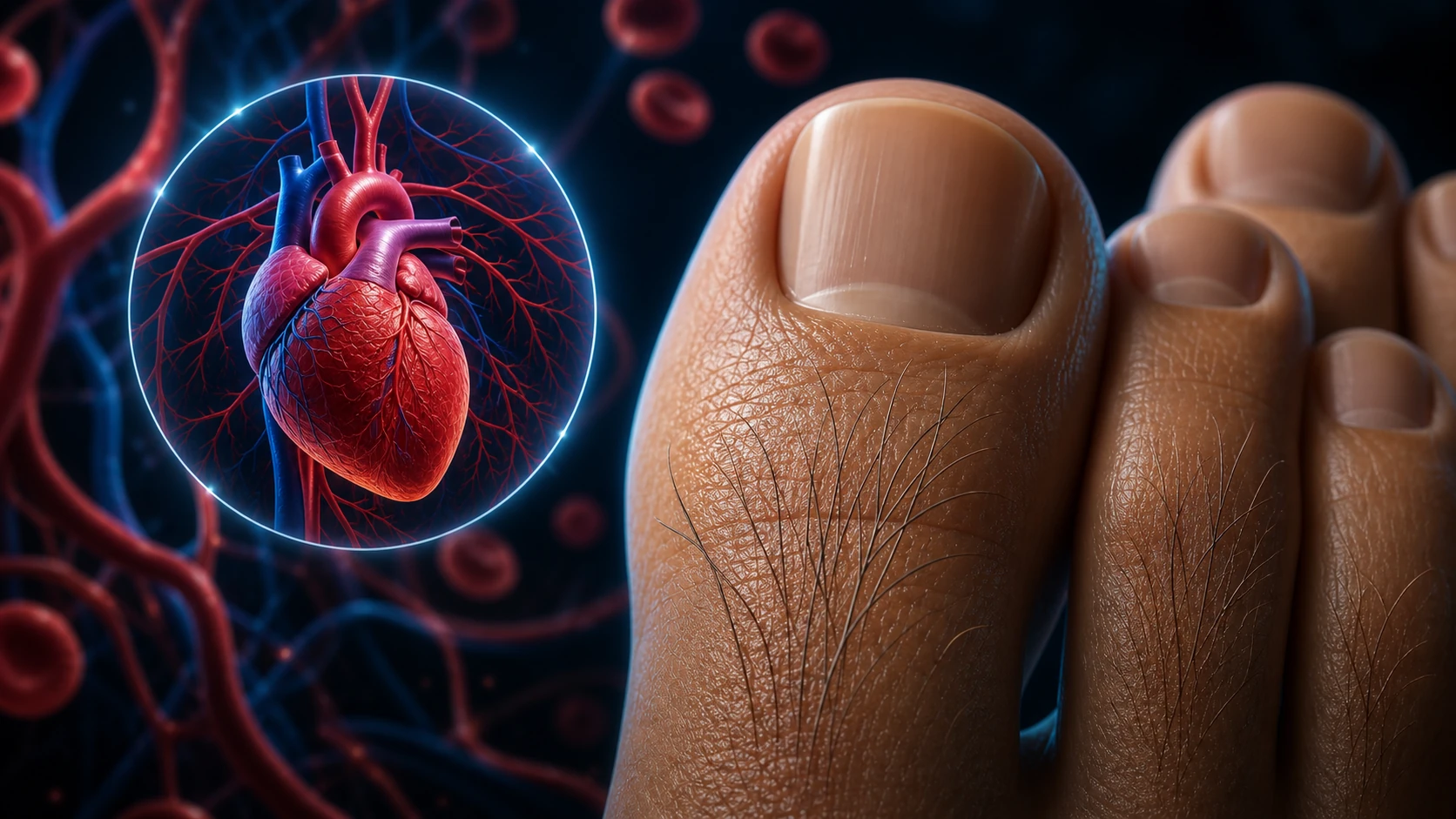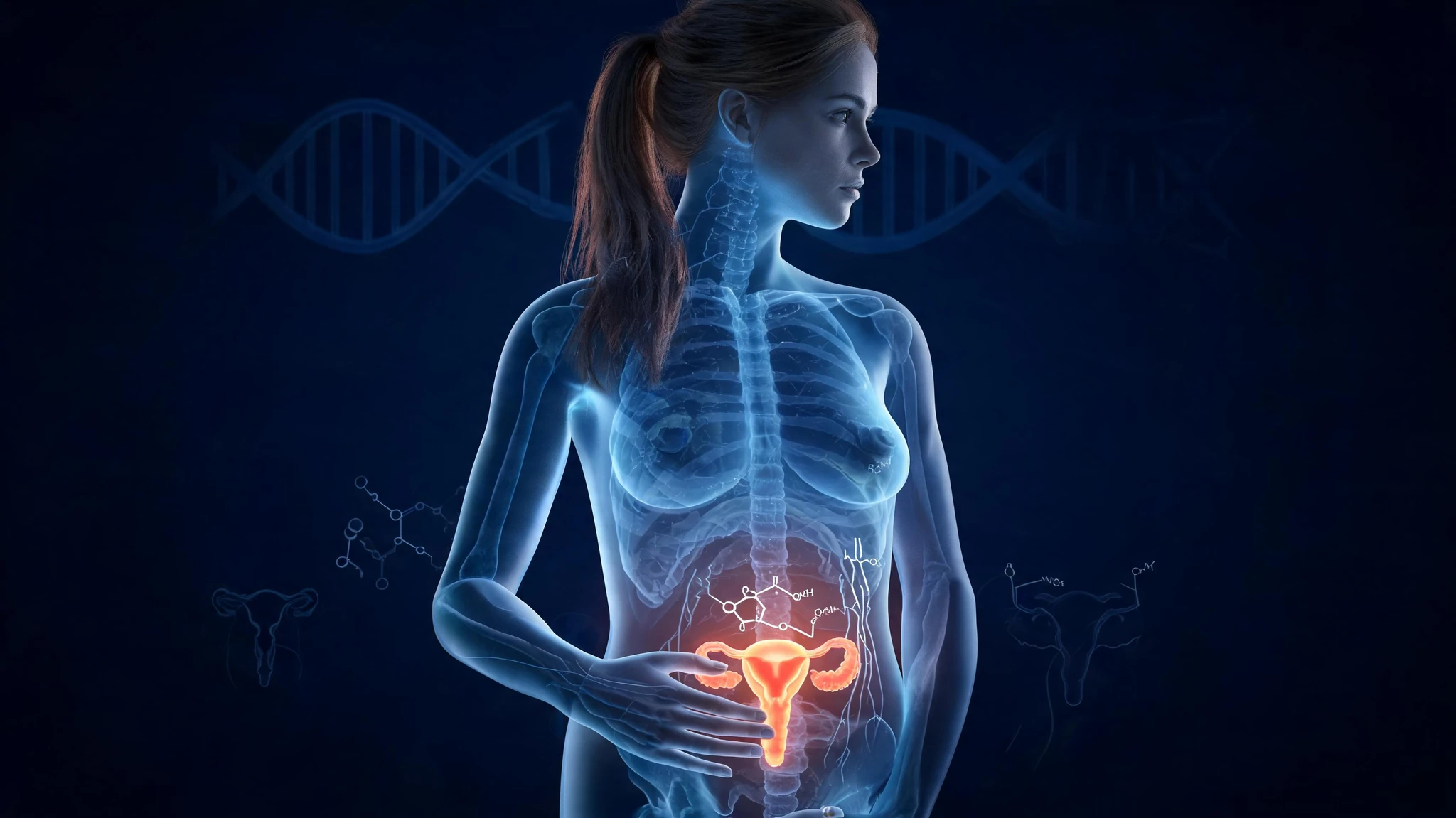
Severe period pain can feel as intense as a heart attack. That comparison comes from John Guillebaud, professor of reproductive health at University College London, who told the BBC in 2016 that his patients describe menstrual cramping as “almost as bad as having a heart attack.” It is not a measured equivalence in millimeters of mercury or beats per minute. It is something more useful: a clinical observation that the people living through this pain rate it at the top of the scale doctors give them.
The science behind why this happens is now reasonably clear. Cells in the uterine lining release chemicals called prostaglandins that drive uterine contractions and constrict local blood vessels, and a 2014 study in Human Reproduction tied higher inflammation markers in the blood to more severe menstrual symptoms in young women.1 The pain is real, biologically traceable, and for a meaningful slice of the population, disabling.
What is dysmenorrhea, exactly?
Dysmenorrhea is the medical term for painful periods. Doctors split it into two buckets. Primary dysmenorrhea is the one most people think of: cramping that starts shortly before or with the period, has no underlying disease behind it, and tends to ease through the twenties and after childbirth. Secondary dysmenorrhea is pain caused by another condition, most commonly endometriosis, adenomyosis, or fibroids. The two can look identical from the outside. The difference matters because the second kind needs the underlying condition treated, not just the pain.
Prevalence estimates vary because studies use different definitions and different populations, but published reviews put the share of menstruating people who experience some level of period pain somewhere between 45 and 95 percent. The lower end captures only severe pain that disrupts daily life. The higher end captures any cramping at all. Either way, the experience is the rule, not the exception.
Why does it hurt so much?
The headline mechanism is prostaglandin-driven contraction. After ovulation, if there is no pregnancy, the uterine lining begins to break down. Cells in that lining release prostaglandins, especially prostaglandin F2 alpha. These chemicals do two things. They make the uterine muscle contract, which is how the lining is shed. And they constrict nearby blood vessels, which briefly reduces oxygen delivery to the muscle wall. That second part is the same kind of process that causes the chest pain of angina, just in a different organ. The body interprets oxygen-starved muscle as pain. Hard pain.
People with more severe cramps tend to release more prostaglandins than people with mild ones. That is part of why the standard medical first line is a non-steroidal anti-inflammatory drug like ibuprofen or naproxen. These drugs do not numb pain in the way a numbing agent does. They reduce the upstream production of prostaglandins so there is less of the chemical signal driving contractions in the first place. A 2015 Cochrane review of 80 randomized trials concluded that NSAIDs are clearly more effective than placebo for dysmenorrhea, although the side-effect profile is meaningful and not everyone responds.3
Inflammation appears to be a second, related layer. The 2014 Bertone-Johnson study, published in Human Reproduction, looked at C-reactive protein levels in young women and found that higher levels of this inflammation marker were associated with more severe menstrual cramps and several other premenstrual symptoms.1 It was a cross-sectional study, so it cannot prove that inflammation causes worse pain, but it adds a plausible biological link between systemic inflammation and what shows up in the pelvis once a month.
It is not just one study, and it is not all in your head
For decades, women describing severe period pain have been told some version of the same thing. Take an ibuprofen. Use a hot water bottle. It is normal. The lived gap between that advice and the experience is wide, and the published literature increasingly backs up the people on the lived side of it.
A 2019 nationwide cross-sectional survey in BMJ Open captured the working life cost of this. Researchers asked 32,748 women in the Netherlands about menstrual symptoms and productivity. About 14 percent reported missing work or school in the past year because of their periods. More striking, almost 81 percent reported “presenteeism”: showing up but working at reduced capacity, on average for several days per cycle.2 When the authors converted those days into productivity loss, the cost was substantial. The point is not the number of euros. The point is that something this common is not, by any honest definition, minor.
Whether period pain is comparable to a heart attack on a measured scale is a question no good study has cleanly answered, partly because pain is famously difficult to measure across people, and partly because no ethics board would design that study. What is clear is that on patient-reported pain scales, severe primary dysmenorrhea routinely sits in the same range that clinicians associate with serious acute medical events. That deserves to be taken seriously by the doctor across the desk.

What actually helps?
Treatment depends on severity and on whether there is an underlying condition driving the pain. For primary dysmenorrhea, several interventions have decent evidence behind them.
NSAIDs. Ibuprofen, naproxen, and mefenamic acid all reduce prostaglandin production. The Cochrane review of 80 trials found NSAIDs significantly more effective than placebo and at least as effective as paracetamol, although they did not establish that any single NSAID outperformed the others.3 They work best when started at the first sign of pain, or even the day before bleeding begins, rather than after a full cramp has set in. Side effects include stomach upset and, with prolonged use, kidney and gastric concerns, so they are not a daily-forever solution.
Heat. A continuous low-level heat patch worn on the lower abdomen, the kind that stays warm for hours, performed about as well as ibuprofen in a 2001 randomized trial in Obstetrics and Gynecology, and the combination of heat plus ibuprofen worked faster than either alone.5 A standard hot water bottle is a reasonable approximation of the same idea. The mechanism is partly muscle relaxation, partly distraction, and partly an effect on local blood flow.
Exercise. A 2019 Cochrane review of randomized trials concluded that regular exercise, including aerobic exercise and stretching done several times a week, probably reduces menstrual pain intensity compared with no exercise, although the evidence quality was rated low to moderate.4 The reviewers were careful: this is not a quick fix, and you do not exercise through an active cramp expecting magic. The benefit shows up across cycles.
Hormonal options. Combined oral contraceptives, the progesterone IUD, and other hormonal methods reduce or eliminate menstruation in many users and tend to reduce dysmenorrhea sharply when they do. They are not appropriate for everyone, but for someone whose pain is severe and whose life is being shaped around it, this is a conversation worth having with a clinician.

What about supplements? A separate 2016 Cochrane review of dietary supplements for dysmenorrhea looked at fenugreek, ginger, valerian, and several others, and found the evidence too thin and inconsistent to make confident recommendations. Some small trials looked promising. None were robust enough to call settled. People who try ginger tea or magnesium are not necessarily wrong, but they should know the evidence is weaker than for the options above.
When period pain is not “just” period pain
Some patterns push a clinician to look harder. Pain that gets worse over time rather than better. Pain that lasts well beyond the bleeding days, or starts a week before the period. Pain that does not respond to NSAIDs at appropriate doses. Pain accompanied by very heavy bleeding, deep pelvic pain during sex, pain with bowel movements during a period, or fertility difficulties. Any of these can point to endometriosis, adenomyosis, or uterine fibroids, all of which are common, all of which are often diagnosed late, and all of which respond to specific treatments once identified.
Endometriosis in particular has a notoriously long path to diagnosis. International surveys consistently put the average delay between symptom onset and a confirmed diagnosis at somewhere between 7 and 10 years. The reasons are tangled. Symptoms get normalized by family, by school, by clinicians. Imaging often misses it. Definitive diagnosis still typically requires laparoscopy. The practical consequence is that someone whose pain feels far outside the normal range deserves to be heard rather than reassured into another decade of waiting.
How to talk to your doctor without losing the plot
Doctors are short on time and long on patients. A few specifics make a visit work better. Track the pain for two or three cycles before the appointment using a simple scale (a 0-to-10 rating works) and note when it starts, when it peaks, and what stops your day. Note what you have already tried, at what dose, on what schedule, and what happened. Bring up presenteeism: the days you went to work or school but functioned at half capacity. The 2019 BMJ Open survey is a useful frame here, because it shows that this category of harm is now documented in the literature, not just in your head.2
If a clinician dismisses what you describe and you have the option, get a second opinion. Specialists in pelvic pain or in endometriosis exist and are increasingly accessible. Telemedicine has made some of this easier. The goal is not to win an argument. It is to find someone who treats your pain as data rather than as a personality trait.

Common questions about period pain
Is it actually possible for period pain to feel like a heart attack?
On patient-reported pain scales, yes. Severe primary dysmenorrhea regularly scores in the same range clinicians associate with serious acute pain. There is no measured equivalence between the two events, but the comparison reflects how patients describe the experience, and that description matters.
Will my period pain go away on its own?
Primary dysmenorrhea often eases through the twenties and after childbirth, but “often” is not “always.” Pain that worsens over time, stays severe through your thirties, or stops responding to NSAIDs is worth investigating, not waiting out.
Are NSAIDs safe to take every cycle?
For most healthy adults, occasional cycle-only use of ibuprofen or naproxen at recommended doses is reasonable, and Cochrane evidence supports their efficacy.3 Daily long-term use carries stomach, kidney, and cardiovascular risks and should be discussed with a clinician, especially if you are over 40 or have other health conditions.
Does exercise really help, or is that just generic advice?
A 2019 Cochrane review found that regular exercise probably reduces pain intensity, with low-to-moderate quality evidence behind the claim.4 It is not a same-day rescue. It is a cycle-to-cycle change.
What if my pain is severe and nothing seems to work?
That is the moment to push for a workup. Severe, persistent, or treatment-resistant pelvic pain can point to endometriosis, adenomyosis, or fibroids, all of which are treatable once identified. Ask specifically about referral to a gynecologist with a pelvic pain interest.
What this comes down to
Period pain is real biology. Prostaglandins drive uterine contractions, blood vessels constrict, oxygen drops, and the body reads that as pain on the same system that registers any other serious pain in the body. Inflammation appears to amplify the signal. For some people the system stays quiet. For others it screams. Both are normal, in the literal sense that both are common, but only one is acceptable as a standing condition of life.
If your pain sits at the loud end of that range, the right next step is not toughening up. It is a conversation with someone who can help you sort primary from secondary, try the interventions with the strongest evidence first, and keep going if those do not work. The pain is not a character flaw. It is a clinical question with answers.
Sources
- Bertone-Johnson ER, et al. Association of inflammation markers with menstrual symptom severity and premenstrual syndrome in young women. Human Reproduction. 2014. PubMed: 25035435
- Schoep ME, et al. Productivity loss due to menstruation-related symptoms: a nationwide cross-sectional survey among 32 748 women. BMJ Open. 2019. PubMed: 31248919
- Marjoribanks J, et al. Nonsteroidal anti-inflammatory drugs for dysmenorrhoea. Cochrane Database of Systematic Reviews. 2015. PubMed: 26224322
- Armour M, et al. Exercise for dysmenorrhoea. Cochrane Database of Systematic Reviews. 2019. PubMed: 31538328
- Akin MD, et al. Continuous low-level topical heat in the treatment of dysmenorrhea. Obstetrics and Gynecology. 2001. PubMed: 11239634