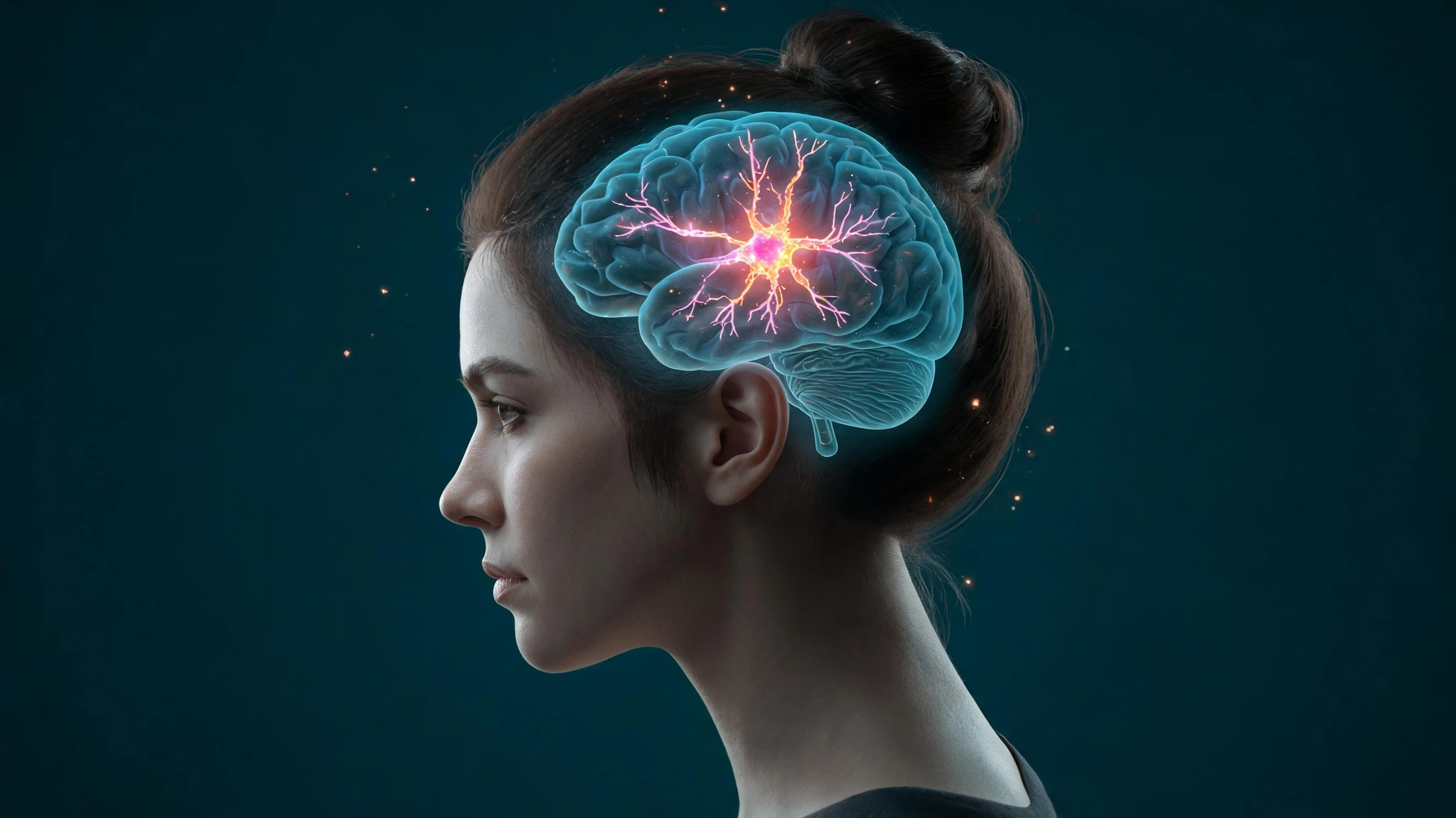
In 2011, a team led by Britta Hölzel at Massachusetts General Hospital and Harvard Medical School scanned the brains of sixteen people before and after an eight-week mindfulness course, then compared them with seventeen people who had not meditated at all. The meditators showed measurable increases in gray matter density in regions tied to learning, memory, and emotional processing.1 Daily practice averaged about 27 minutes.
That finding, published in Psychiatry Research, is the study almost every “meditation changes your brain” headline traces back to. It is small, it is suggestive rather than definitive, and it is also one of the more carefully done structural MRI studies on contemplative practice we have. Worth understanding, then, on its own terms.
What the Hölzel team actually measured
The 2011 paper used a technique called voxel-based morphometry. In plain terms, researchers ran high-resolution structural MRI scans of each participant’s brain before the program started and again after it ended, then compared the density of gray matter (the tissue packed with neuron cell bodies) voxel by voxel.1
The meditation group enrolled in Mindfulness-Based Stress Reduction, the eight-week curriculum developed by Jon Kabat-Zinn at the University of Massachusetts in 1979. Participants attended weekly group classes, did one all-day silent retreat, and practiced at home using audio recordings. Home practice averaged 27 minutes per day across the eight weeks. Nobody in the meditation arm had a serious prior contemplative practice, so the changes the scanner picked up were attributable to those two months and not to a lifetime of zazen.
The control group did not start meditating. They were rescanned on the same schedule. That matters because brains do change a little just from being scanned twice and from time passing, so a control arm is the only way to know whether the effect is real or background noise.
Five regions stood out in the meditators. Gray matter density rose in the left hippocampus, the posterior cingulate cortex, the temporo-parietal junction, and the cerebellum. A separate analysis flagged decreases in the right amygdala that tracked with self-reported drops in stress.1 Each of those regions has a fairly well-mapped role.
Why those specific regions matter
The hippocampus is the brain’s index card for episodic memory. It is also, oddly, one of the few brain structures where new neurons keep being born in adulthood, a process called adult neurogenesis. Hippocampal volume tends to shrink in chronic stress, depression, and Alzheimer’s disease. Anything that supports this region is interesting.
The posterior cingulate cortex sits near the back of the midline of the brain and is part of what neuroscientists call the default mode network, the circuit that lights up when your mind wanders or rehearses worries about yourself. Mindfulness training, in theory, gives you a different relationship with that wandering.
The temporo-parietal junction is involved in perspective-taking and empathy, the ability to model what someone else is thinking. The cerebellum, long thought of as a movement coordinator, also helps regulate cognition and emotion.
The amygdala is the brain’s threat detector. Smaller or less reactive amygdalae are generally associated with calmer baseline emotional reactivity. The Hölzel finding that amygdala density dropped alongside drops in perceived stress is one of the more cited results in the field, though it came from a smaller sub-analysis and deserves the usual caution.

Is the study actually big enough to mean anything?
Sixteen meditators and seventeen controls is a small sample by any standard. It is roughly the size of a graduate seminar. With that few people, an unusual outlier can pull the average around. The authors knew this. They reported effect sizes, used statistical corrections appropriate for whole-brain imaging, and were careful in their language. They did not claim meditation makes you smarter or saner. They claimed regional gray matter density changed in ways consistent with the practice’s described aims.
Replication has been mixed. A 2011 systematic review by Chiesa, Calati, and Serretti in Clinical Psychology Review looked at 23 studies of mindfulness training and cognition and concluded that early-stage practice appeared to improve sustained attention while later-stage practice was associated with broader executive function gains. The authors called the evidence preliminary and noted small samples and methodological inconsistencies as the field’s main problems.2
Three years later, a much larger umbrella review changed the conversation. Madhav Goyal and colleagues at Johns Hopkins, writing in JAMA Internal Medicine in 2014, pooled 47 randomized trials with about 3,500 participants and graded the evidence for meditation programs across a range of outcomes. They found moderate evidence that mindfulness meditation reduces anxiety, depression, and pain, and low evidence for improvements in stress, distress, and quality of life. They found insufficient evidence for any effect on attention, sleep, substance use, or eating behavior in the trials available at the time.3
So the honest summary is this. Mindfulness training appears to do something measurable to mood and to specific brain regions. It is not a wonder drug. It is a real intervention with modest, replicable effects on a few outcomes the evidence base actually covers.
How can a habit reshape physical brain tissue?
The technical answer is neuroplasticity, the umbrella term for any way nervous tissue rewires itself in response to experience. Three mechanisms probably contribute to the kind of density changes Hölzel reported.
First, dendritic remodeling. Neurons grow new branches and new spines on those branches when they are repeatedly activated. A region that is regularly engaged becomes denser at the microscopic level even if neuron count stays roughly constant.
Second, glial cell support. Glia are the non-neuronal cells that wrap and feed neurons, and their numbers shift with use. More activity in a region tends to recruit more glial support.
Third, in the hippocampus specifically, adult neurogenesis. Rodent work by Henriette van Praag, Fred Gage, and colleagues at the Salk Institute showed that voluntary running increased the number of new neurons in the dentate gyrus of aged mice and improved their performance on hippocampus-dependent learning tasks.4 The mouse story does not transplant cleanly to humans, but it gave the field a plausible cellular basis for the idea that adult brains can grow tissue in response to behavior, not just lose it.
Voxel-based morphometry cannot tell which of these three is happening. It just sees that the tissue is denser. That is a real limit of the 2011 result and one the authors flagged.

What does 27 minutes a day actually look like?
The MBSR practice the Hölzel participants used is not exotic. A typical session combines three elements. There is a body scan, a slow attentional sweep through each part of the body in turn. There is sitting meditation, usually anchored on the breath, where the instruction is to notice when the mind has wandered and to bring attention back without judgment. And there is gentle mindful movement, often light yoga.
What participants are not doing is emptying their minds, achieving bliss, or escaping anything. The training is closer to a cognitive workout in noticing where attention has gone and choosing where to put it next. The thousandth time you redirect your attention from a worry about tomorrow back to the sensation of breath at the nostrils is, in this view, a single repetition of the exercise that builds the relevant neural circuitry.
A daily 27-minute commitment is not nothing. It is roughly the length of a sitcom episode without the ads. For most people it requires either getting up earlier or carving an interval out of the evening. The trial participants had structure (weekly classes, audio guides, a teacher to ask questions) that home practitioners working from an app may not have. That structure probably matters.
What about advanced meditators and longer practice?
Studies that scan people with thousands of hours of cumulative practice show different and stronger effects than the eight-week beginner picture. Antoine Lutz, Richard Davidson, and colleagues at the University of Wisconsin compared long-term Buddhist practitioners with novices doing compassion meditation in an fMRI scanner. The expert meditators showed stronger activation in brain regions tied to empathy and emotional processing, including the insula and the temporo-parietal junction, when they listened to emotional vocalizations.5
The same group has reported differences in resting-state activity, gamma-band synchrony, and stress reactivity in long-term meditators. None of this proves causation. People who choose to spend years on a meditation cushion may differ from non-meditators in ways that have nothing to do with the cushion. But the body of work is consistent enough that “expert practice changes the brain in lasting ways” is a reasonable working hypothesis, not a fringe claim.
What it does not do
The Hölzel paper does not show that meditation cures depression, prevents Alzheimer’s, raises IQ, or makes you a kinder person. It shows a regional density change after eight weeks of practice. The Goyal meta-analysis is the more responsible source for clinical questions.3 Its bottom line for general audiences: mindfulness programs are reasonable add-ons for managing anxiety, depression, and pain. They are not first-line treatments and they are not substitutes for medication or therapy when those are indicated.
Anyone in active mental health crisis should be talking to a clinician, not downloading an app. Mindfulness can also surface difficult material. A small fraction of practitioners experience increased anxiety, intrusive memories, or dissociation, especially during long retreats. A good teacher screens for this and adjusts. A meditation app cannot.

How long until you would notice anything?
The honest answer is that subjective effects often appear before structural ones. People in MBSR programs typically report sleeping a little better and reacting a little less sharply to small stressors within two or three weeks. Brain density changes the kind Hölzel measured took the full eight weeks and were detectable only by group-level statistics on MRI scans, not by the participants themselves.
Effects also fade if practice stops. The 2011 paper did not follow participants long term, but other work in the field suggests that the changes scale roughly with continued practice. This is consistent with how the rest of the body works. Cardiovascular fitness, language ability, and motor skills all need maintenance. There is no reason to expect attention training to be different.
Common questions about meditation and the brain
Do you need to meditate for 27 minutes specifically?
No. Twenty-seven was the average daily home practice in the Hölzel study, not a magic number. Shorter sessions appear to help with mood and attention, though the structural brain evidence is strongest at MBSR-style doses (about 20 to 45 minutes most days for eight weeks).
Can a meditation app deliver the same effect?
Possibly, partially. Apps work for some people and not others. The trial evidence on app-delivered mindfulness is younger and weaker than the evidence for in-person MBSR. If you can join a structured program, that has the strongest data behind it.
Is mindfulness the only kind of meditation that changes the brain?
No. Compassion meditation, transcendental meditation, and concentrative practices all show effects in imaging studies, often in different regions. Hölzel’s paper happened to use MBSR. The wider literature is broader.
Could the gray matter changes just be from learning a new skill?
Possibly some of it. Any sustained training (juggling, language study, music) can shift gray matter. The Hölzel team argued the regions involved (memory, self-awareness, perspective-taking, emotion) match what mindfulness practice trains, which is a stronger claim than “any new skill.”
Is this safe for everyone?
For most people, yes. People with active psychosis, severe trauma histories, or recent acute crises should talk to a clinician before starting an intensive program. Mindfulness is not a replacement for treatment.
What to take from a fifteen-year-old study
The Hölzel paper aged better than most early neuroimaging findings, and its central claim has been refined rather than overturned. Eight weeks of structured mindfulness training is associated with measurable changes in regional brain density, and those regions track the practice’s stated aims. Larger meta-analyses since have softened the “rewires your brain” headlines into something more useful: meditation programs help modestly with anxiety, depression, and pain, and the effect probably runs at least partly through the same neural systems Hölzel imaged.1,3
If you have been waiting for proof before trying it, you can stop waiting. The proof is good enough. What it does not do is meditate for you. The 27 minutes have to come from somewhere in your day, and the only way to find out what they do for your specific brain is to spend them.
Sources
- Hölzel BK, Carmody J, Vangel M, et al. Mindfulness practice leads to increases in regional brain gray matter density. Psychiatry Research. 2011. PubMed: 21071182
- Chiesa A, Calati R, Serretti A. Does mindfulness training improve cognitive abilities? A systematic review of neuropsychological findings. Clinical Psychology Review. 2011. PubMed: 21183265
- Goyal M, Singh S, Sibinga EM, et al. Meditation programs for psychological stress and well-being: a systematic review and meta-analysis. JAMA Internal Medicine. 2014. PubMed: 24395196
- van Praag H, Shubert T, Zhao C, Gage FH. Exercise enhances learning and hippocampal neurogenesis in aged mice. The Journal of Neuroscience. 2005. PubMed: 16177036
- Lutz A, Brefczynski-Lewis J, Johnstone T, Davidson RJ. Regulation of the neural circuitry of emotion by compassion meditation: effects of meditative expertise. PLoS One. 2008. PubMed: 18365029