Three weeks of writing thank-you letters, one a week, was enough to nudge brain activity in a region tied to learning and emotion regulation. That is the headline finding of a 2016 study by Prathik Kini and colleagues at Indiana University, published in NeuroImage.1 Forty-three adults seeking mental-health counseling were split into three groups. One wrote weekly gratitude letters for three weeks. Three months after the intervention ended, fMRI scans during a separate gratitude task showed that the letter-writing group had stronger activity in the medial prefrontal cortex than the control groups.
It is a small study with a long shadow. Headlines often turn it into “gratitude rewires your brain in three weeks,” which overshoots what one fMRI experiment can prove. The careful read is gentler and probably more useful: brief, repeated gratitude practice seems to leave a faint neural fingerprint that is still visible months later, at least in people already motivated enough to seek therapy.
What the 2016 Indiana study actually measured
The participants were university students who had requested counseling at their campus mental-health center. They were randomly assigned to three groups. One wrote a letter of thanks once a week for three weeks. A second wrote about negative experiences. A third did no expressive writing at all. Everyone received standard counseling alongside the writing tasks.1
Three months after the writing ended, participants returned for a fMRI scan. While in the scanner, they played a “pay it forward” task. A benefactor gave them money, and they decided how much to pass on to a charity in the benefactor’s name, while feelings of gratitude were measured trial by trial. The gratitude-letter group showed greater activity in the medial prefrontal cortex during these moments compared to the others. The effect was strongest in the medial frontal gyrus and persisted three months past the last letter.1
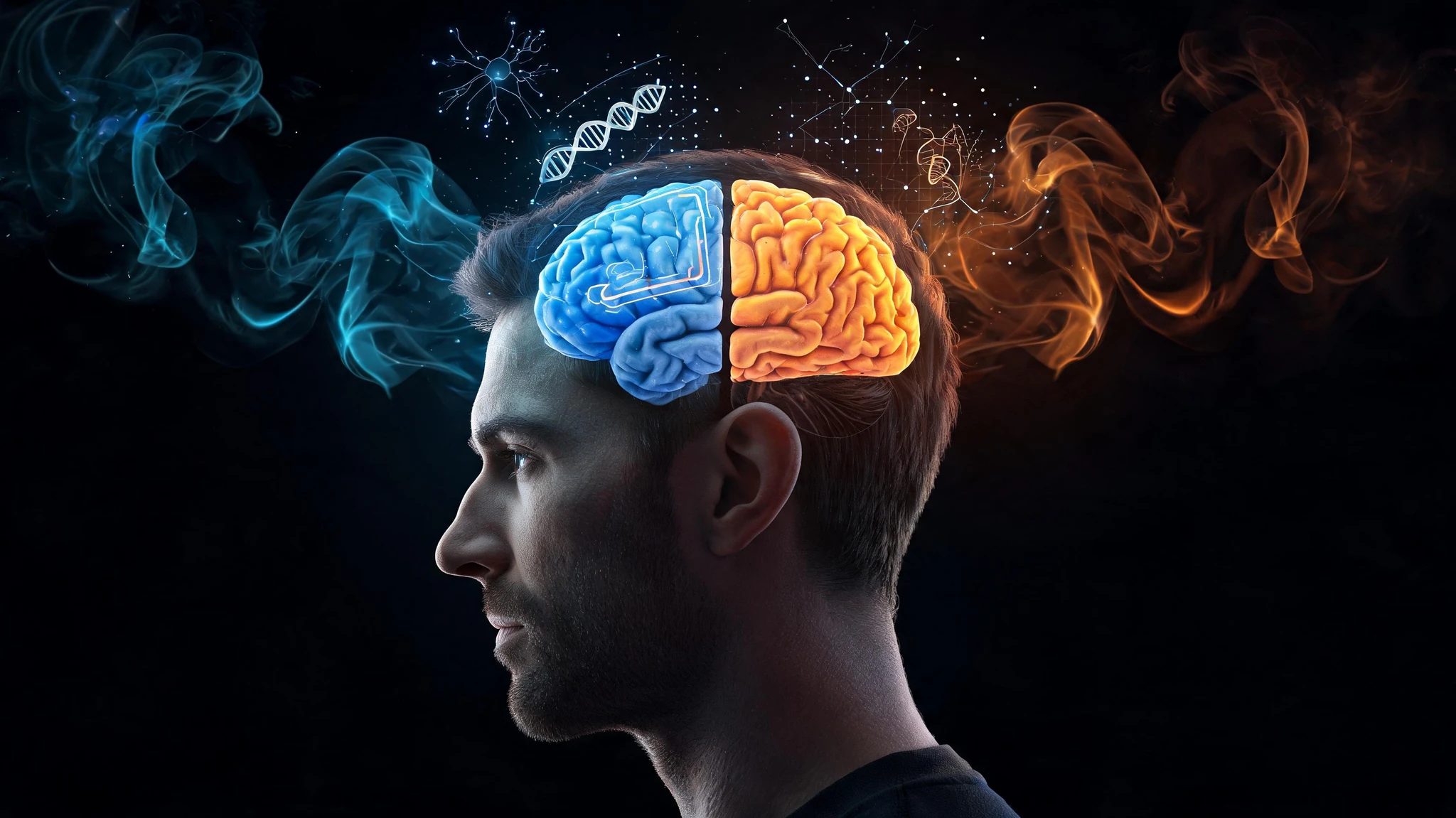
The medial prefrontal cortex sits just behind the forehead. It is involved in working out the value of social rewards, simulating other people’s points of view, and regulating emotional responses. The authors interpreted the lingering activation as a sign that gratitude practice may shape how the brain processes prosocial situations later on. They were careful to call it a “profile of activation,” not proof of structural rewiring.1
Is this really “rewiring”?
Strictly speaking, the Kini study did not show that neurons grew new connections. fMRI measures blood oxygen changes that track neural activity. It cannot photograph synapses. What it can show is whether a brain region is more or less engaged during a task. So the honest summary is: people who wrote gratitude letters for three weeks engaged the medial prefrontal cortex more during a related task, three months later.1
That said, “rewiring” is not entirely off the mark in spirit. Repeated mental practice does change neural circuits over time. The mechanism is usually called experience-dependent plasticity, and it has been documented in domains as different as juggling and meditation. The Kini paper is one piece in a wider puzzle, and it suggests gratitude may be one of the practices that leaves a mark.
The trick is to keep expectations sober. A three-week practice is not going to overwrite a year of grief or a clinical depression. It is a small lever, applied consistently, and the brain seems to notice.
What gratitude does outside the scanner
The behavioral evidence on gratitude is older and broader than the brain data. In 2003, Robert Emmons and Michael McCullough ran an experiment that has become the canonical reference. Hundreds of participants were asked to keep a weekly journal. One group listed five things they were grateful for. Another listed five hassles. A third listed five neutral life events. Over ten weeks, the gratitude group reported better moods, fewer physical complaints, and more time spent exercising than the hassles group.2
A few years later, Martin Seligman and colleagues tested several positive-psychology exercises in a randomized trial of more than 400 adults. The “gratitude visit,” in which participants wrote and personally delivered a letter of thanks to someone who had never been properly thanked, produced the largest immediate boost in happiness. The lift faded by a month. A simpler exercise, writing down three good things from the day each evening for a week, produced smaller initial gains that were still measurable six months later.3

Sonja Lyubomirsky’s lab has spent two decades testing why some interventions stick and others fade. In a 2011 longitudinal trial, her group found that the people who actually benefited from gratitude exercises were those who genuinely wanted to feel happier and who put real effort into the task. Going through the motions barely moved the needle.6 That finding has held up across replications and is a useful corrective to the “just keep a gratitude journal” advice that has flooded social media.
Why the medial prefrontal cortex matters
The brain region highlighted in the Kini paper is not a “gratitude center.” There is no single gratitude center. The medial prefrontal cortex is part of a larger network that handles social cognition and self-referential thought. It lights up when you think about your own values, when you imagine what a friend is feeling, and when you weigh whether to share something. It is also closely involved in regulating the amygdala, the brain’s threat detector.
If gratitude practice tunes this region, it makes biological sense that the downstream effects would show up in mood, in sleep, in the way people respond to small slights. A better-tuned medial prefrontal cortex is, very loosely, a brain that is faster at finding the prosocial angle in a situation.
It also makes sense of a finding from Adam Grant and Francesca Gino in 2010. Across four experiments, expressing gratitude doubled the likelihood that a recipient would help the thanker again, and the effect was driven by the recipients feeling socially valued, not by feeling indebted.5 Saying thank you well is, in social-network terms, contagious. It changes both the sender and the receiver.
The loving-kindness sibling
Gratitude shares a family with another well-studied practice: loving-kindness meditation. In a 2008 trial, Barbara Fredrickson and colleagues followed 139 working adults through seven weeks of guided loving-kindness meditation. Participants reported steady increases in daily positive emotions, and those increases predicted later gains in social support, life purpose, and reduced symptoms of illness.4 The mechanism the authors proposed is “broaden and build”: positive feelings widen the mental aperture, and that widened aperture lets people build resources that pay dividends later.
Gratitude fits the same model. It is a positive emotion that points outward, toward someone else, which makes it stickier than a private mood like joy. When you write a thank-you letter, you are doing two things at once: rehearsing a positive memory, and strengthening a tie to another person. Both of those are likely contributors to whatever the brain scan picked up three months later.

How to actually try this at home
Researchers tend to agree on a few practical points. First, frequency matters less than depth. Emmons found that journaling once a week worked better than three times a week, possibly because daily journaling started to feel like a chore.2 Second, specificity matters a lot. “I am grateful for my family” is weaker than “I am grateful that my brother called Tuesday and made me laugh about the dog.” Naming the moment seems to engage the memory and emotion systems more fully.
Third, the gratitude visit, where you write a letter and read it aloud to the recipient, is the heaviest dose with the biggest short-term effect. Most people will not do this often. Once or twice a year is plausible, and Seligman’s data suggest even one well-delivered letter can lift mood for weeks.3
A reasonable starter routine, drawn from the trials above:
- Once a week, write a paragraph about one specific thing someone did that you were thankful for. Be detailed. Mention names, places, sensory details. Aim for a small page, not a book.
- Once a quarter, pick the strongest of those weekly entries and turn it into a letter to the person involved. Send it. If you can read it aloud, do that.
- If you are working with a therapist, share what you wrote. The Indiana study layered gratitude letters on top of counseling. That combination is what the data actually support.1
The main thing to avoid is the gratitude version of toxic positivity. If you spend the journal time talking yourself out of legitimate grief or anger, the practice can backfire. The studies that work tend to involve real moments of gratitude, not forced ones.
Where the evidence stops
Most of the gratitude literature, including the Kini study, comes from convenience samples of college students or counseling clients. Effect sizes are moderate. Replications are mixed. A 2020 meta-analysis of gratitude interventions concluded that the effects on anxiety and depression are real but modest, comparable to other low-cost positive-psychology exercises and considerably smaller than the effect of established therapies.
Long-term brain data is thin. Three months is not three years. Whether the patterns the Kini team observed would persist for a year, or strengthen, or fade, is an open question.1 Bigger studies with diverse samples, age ranges beyond college, and direct measures of brain structure rather than just activity would close the gap. Researchers are working on it, and a few neuroimaging groups have started pre-registering longer follow-ups. For now, the safe version of the story is the one Lyubomirsky’s lab keeps repeating: a gratitude practice is one of several useful tools for raising the floor of well-being in motivated people. It is not a treatment for serious mental illness, and it is not a substitute for sleep, exercise, social ties, or care from a professional.6
Common questions about gratitude and the brain
How long do you have to write gratitude letters before anything changes?
The Indiana study used three weekly letters across three weeks. Brain differences were detected three months after the last letter, so the dose was low and the effect lingered.1 Other trials see mood lifts after a single well-delivered gratitude visit.3
Does writing thank-you letters work for clinical depression?
The evidence is suggestive, not definitive. Gratitude exercises can support care, but they have not been shown to replace evidence-based treatments like cognitive behavioral therapy or medication. The Kini participants were already in counseling.1
Is texting a thank-you the same as writing a letter?
Probably not. The benefit appears to come from elaboration, naming the specific thing, the moment, the way it landed. A two-word text rarely engages those systems. A handwritten or carefully composed letter does.
What if I cannot think of anything to be grateful for?
That is information. If gratitude feels impossible week after week, that often signals depression, exhaustion, or a difficult life situation that needs more than a journal. Talking to a clinician is a better next step than forcing the practice.
Can children benefit from gratitude practices?
Some school-based studies suggest yes, though the effects vary by age and how the practice is framed. The published trials on adults are stronger and easier to interpret.3
The honest takeaway
Gratitude letter writing is not a magic trick. The 2016 fMRI study is one careful experiment, with a small sample of motivated people, that hints at a real but quiet biological footprint of a low-cost practice.1 Stack that against twenty years of behavioral data showing the same practice nudges mood, sleep, and social warmth in modest but consistent ways, and a sensible picture appears.2,3,4
If you want to try it, the bar is genuinely low: a paragraph a week, a letter every few months, and a willingness to mean it. The brain is happy to keep score.
Sources
- Kini P, Wong J, McInnis S, Gabana N, Brown JW. The effects of gratitude expression on neural activity. NeuroImage. 2016. PubMed: 26746580
- Emmons RA, McCullough ME. Counting blessings versus burdens: an experimental investigation of gratitude and subjective well-being in daily life. Journal of Personality and Social Psychology. 2003. PubMed: 12585811
- Seligman ME, Steen TA, Park N, Peterson C. Positive psychology progress: empirical validation of interventions. American Psychologist. 2005. PubMed: 16045394
- Fredrickson BL, Cohn MA, Coffey KA, Pek J, Finkel SM. Open hearts build lives: positive emotions, induced through loving-kindness meditation, build consequential personal resources. Journal of Personality and Social Psychology. 2008. PubMed: 18954193
- Grant AM, Gino F. A little thanks goes a long way: explaining why gratitude expressions motivate prosocial behavior. Journal of Personality and Social Psychology. 2010. PubMed: 20515249
- Lyubomirsky S, Dickerhoof R, Boehm JK, Sheldon KM. Becoming happier takes both a will and a proper way: an experimental longitudinal intervention to boost well-being. Emotion. 2011. PubMed: 21500907