People who exercised the most in a 2008 study of 2,401 twins had cells that, on a molecular yardstick, looked about nine years younger than the cells of their least active peers.1 The yardstick was telomere length, the protective DNA cap at the end of every chromosome that gets a little shorter each time a cell divides.
The most active group in that study averaged roughly 199 minutes of vigorous activity a week. The least active group averaged 16. Researchers Lynn Cherkas and colleagues, writing in the Archives of Internal Medicine, found the gap in telomere length between those two groups corresponded to about nine years of biological aging.1
What is a telomere, in plain terms?
If you’ve ever noticed the small plastic tip on a shoelace, the part that keeps the lace from fraying when it bumps against the floor, you already understand the basic idea. A telomere is the biological version of that tip. It sits at the end of a chromosome and absorbs the wear that comes with cell division.
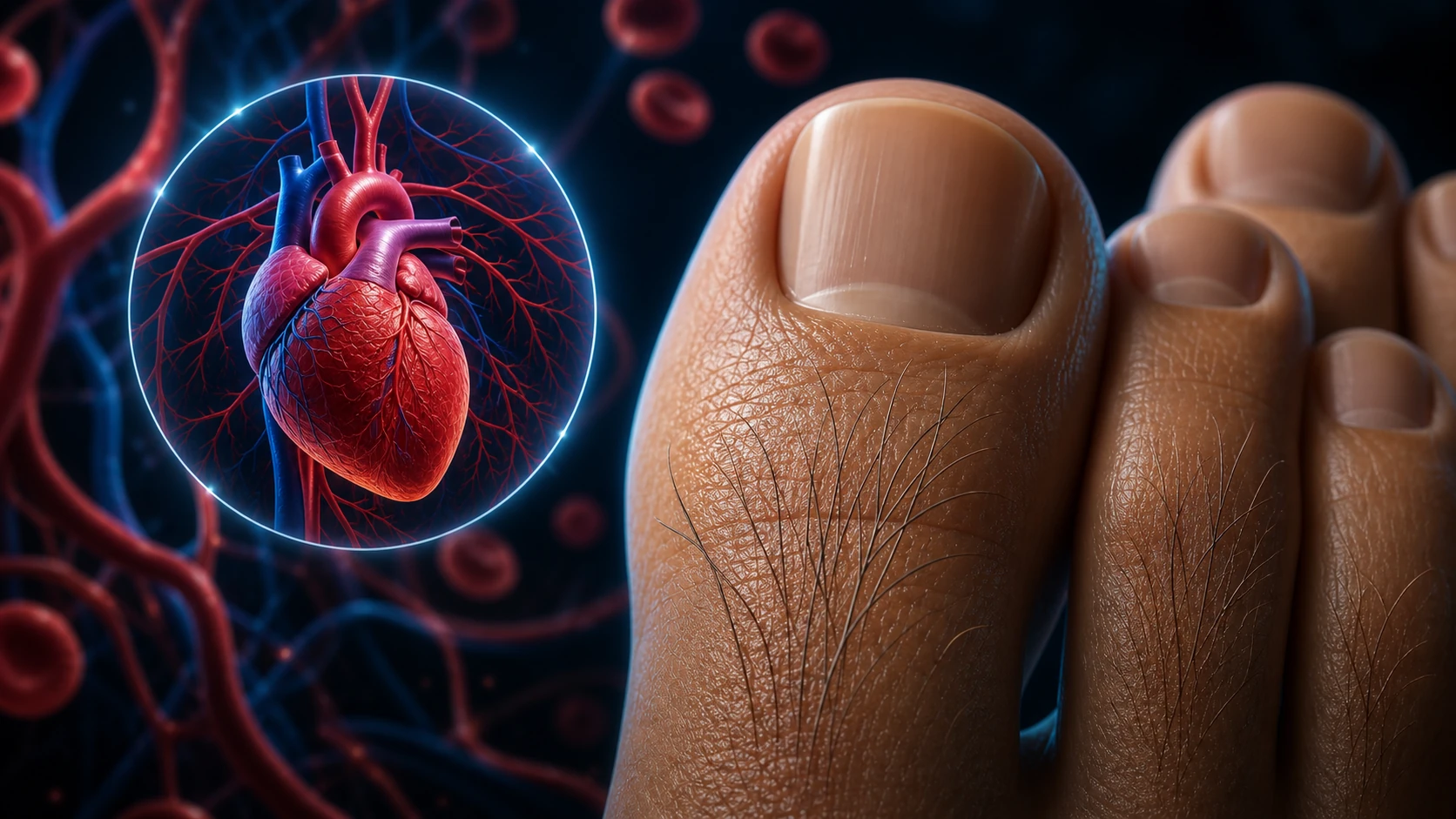
Each time one of your cells copies itself, the very ends of the chromosomes don’t get fully reproduced. A small bit of telomere is lost in the handoff. Over many divisions, the cap erodes. When it gets short enough, the cell stops dividing and either retires (a state biologists call senescence) or self-destructs. That’s part of why human tissue, on the whole, ages.
This is one of the better-confirmed stories in cell biology. Shorter average telomere length in white blood cells has been linked, in population studies, with higher rates of cardiovascular disease and earlier mortality. So when something appears to slow that erosion, it’s worth a careful look.

What did the 2008 twin study actually find?
Cherkas and her team measured leukocyte telomere length in 2,401 white twin volunteers, mostly women, drawn from the UK Adult Twin Registry.1 They asked each participant about leisure-time physical activity over the past year and divided the group into four activity tiers, from sedentary to very active.
The most active quartile had measurably longer telomeres than the least active. The size of the difference, after adjusting for age, sex, body mass index, smoking, and a handful of other variables, came out to about 200 nucleotides of telomeric DNA. Working back from the average rate at which telomeres shorten with age, the authors estimated that gap was equivalent to roughly nine years of cellular aging.1
One detail worth keeping. The study compared identical twins discordant for activity, meaning pairs where one twin exercised much more than the other. Even within those pairs, the more active twin tended to have longer telomeres. That partly controls for genetics and shared upbringing, which strengthens the case that the activity itself is doing something rather than the lifestyle being a marker for something else.
Has anyone replicated it?
Yes, with caveats. A 2009 paper in Circulation by Christian Werner and colleagues looked at endurance athletes and matched sedentary controls.2 The athletes had longer telomeres in their leukocytes and in the cells that line the inside of blood vessels. Werner’s group also found higher activity of telomerase, the enzyme that rebuilds telomere ends, in the athletes’ immune cells. That’s a plausible biological route from running shoes to cellular maintenance.
More recently, a 2023 NHANES analysis of 4,458 American adults looked specifically at jogging and running.3 People who logged the most minutes of running per week had longer leukocyte telomeres than those who ran little or not at all, and the difference held up after adjusting for the usual confounders. The effect appeared strongest in adults who ran roughly 75 to 100 minutes a week, a more reachable target than elite endurance training.

None of these studies prove that exercise causes telomeres to lengthen. They are observational. Active people also tend to sleep better, eat differently, smoke less, and carry less weight, and untangling those threads cleanly inside a human body is hard. What the studies do show, consistently, is a correlation that survives a fair amount of statistical scrubbing.
Why might movement help, biologically?
The leading explanations cluster around two old enemies of cellular health: chronic inflammation and oxidative stress.
Telomere shortening accelerates when cells are bathed in inflammatory signals or in reactive oxygen species, the unstable molecules that bang into DNA and rough up its ends. Regular moderate exercise tends to lower resting inflammatory markers like C-reactive protein and to upregulate the body’s antioxidant defenses. Less inflammation and less oxidative damage means each cell division is, on average, gentler on the chromosome ends.
Werner’s group offered a second piece of the puzzle.2 They found that the leukocytes of trained athletes expressed more telomerase activity. Telomerase is the enzyme that adds DNA back to telomere ends, and most adult cells keep it dialed down. If exercise nudges that activity up modestly in immune cells, it could help offset the normal erosion.
A third strand involves stress hormones. Chronic psychological stress raises cortisol, and cortisol has been linked, in several studies, to faster telomere attrition. Exercise tends to dampen the stress response over time, which may indirectly protect chromosome ends. A 2016 study led by Elissa Epel found that even short-term lifestyle interventions, including a residential meditation retreat, shifted gene-expression patterns linked to cellular aging.4 The combined picture is that telomeres respond to how the body is treated, not just to how old it is.
How much movement, and what kind?
The Cherkas study didn’t ask people to train. It just asked what they already did. The most active quartile was hitting roughly 199 minutes of vigorous activity a week, which is about 28 minutes a day, every day, of something that gets you breathing hard.1 That’s a meaningful amount, but it’s also far less than what an athlete in the Werner study was doing.2
The 2023 NHANES paper offers a friendlier benchmark. The strongest associations with longer telomeres clustered around 75 to 100 minutes of running a week.3 Translated into normal-life terms, that’s three runs of about half an hour, which falls inside the standard public-health recommendation of 150 minutes of moderate or 75 minutes of vigorous activity per week.
None of the studies suggest you have to run. Cycling, swimming, hill walking, dancing, racket sports, and brisk hiking all show up in the broader exercise-and-aging literature with similar protective patterns. The shared ingredient is sustained, repeated, somewhat-effortful movement, not a particular sport.
The flip side, which is also useful information, is that the biggest gap in those studies is between the truly sedentary and the moderately active. Going from no activity to a few thirty-minute walks a week appears to do more, biologically, than going from already-fit to elite. If you’re starting from a low base, you have the most to gain.
It is not a fountain of youth
Worth saying clearly. Exercise does not reset your age. It does not undo decades of damage in a few months. The size of the telomere effect in these studies is measurable but not enormous, and individual variation is wide. Plenty of active people still develop the diseases of aging. Plenty of sedentary people live to ninety.
What the data support is something more modest and more durable. Regular movement is one of a small number of inputs that nudges cellular maintenance in the right direction. Sleep, nutrition, social connection, and stress management appear to be others. Each one moves the needle a little. Stacked together, over years, they add up.
How long does the effect last if you stop?
The honest answer is that nobody has a clean longitudinal study of telomere length in people who exercised hard for a decade and then stopped. What can be said is that some inflammatory and oxidative-stress benefits of exercise fade within weeks of going back to a sedentary pattern, while others, like improved insulin sensitivity, fade over months. Telomeres themselves change slowly, on the order of years, so a short break is unlikely to erase prior gains. A long break probably does, gradually.

The practical reading of the evidence is that consistency matters more than intensity. A person who walks briskly four days a week for thirty years is, by the lights of these studies, in better cellular shape than someone who trains for a marathon at forty and then never moves again.
What about strength training?
Most of the cited telomere studies focused on aerobic activity, because that’s what the questionnaires captured. Smaller studies that have looked at resistance training alone show mixed results. Some find a telomere benefit, some don’t. What strength work does reliably is preserve muscle mass and metabolic flexibility into older age, which has its own well-documented links to lower mortality.
A reasonable interpretation is that aerobic and resistance work are complementary rather than competitive. The body benefits from both, and there’s no evidence that adding strength work to a walking or running habit cancels out telomere gains.
What about diet, sleep, and the rest of the picture?
Telomere research has a long shadow, and exercise is only one input. Diets high in processed foods and added sugar correlate, in several cohorts, with shorter leukocyte telomeres. Diets weighted toward vegetables, legumes, fish, nuts, and olive oil correlate with longer ones. Smoking is consistently and substantially worse for telomeres than almost any other modifiable factor. Chronic short sleep, defined as habitually under six hours a night, also lines up with faster telomere attrition in adult studies.
Epel and colleagues showed in a 2016 paper that even a one-week residential intervention shifted gene-expression patterns linked to cellular aging, in both meditators and non-meditators who simply rested.4 The body, in other words, listens. It listens to whether you move, what you eat, how you sleep, and how stressed you are. None of those levers is magic on its own. Pulled together, they account for a meaningful share of how a person’s cells age relative to their birthday.
Common questions about exercise and biological aging
Does exercise actually make me live longer, or just feel better?
Both, probably. Population studies consistently show lower all-cause mortality in people who meet basic activity guidelines. The telomere data offers one possible cellular reason for that pattern. The size of the lifespan effect is real but not huge, on the order of a few years on average.
Is it too late to start in my fifties or sixties?
No. Several studies of older adults who began structured exercise programs show meaningful gains in cardiovascular markers and inflammation within months. Telomere changes are slower, but the rest of the body responds at any age.
Does walking count?
Yes. Brisk walking gets most sedentary people into the moderate-intensity zone, which is where the biggest health gains live. The Cherkas study did not require gym workouts; it counted leisure-time physical activity broadly.1
Will I see telomere length on a regular blood test?
Not at the moment. Commercial telomere-length tests exist, but most physicians don’t order them and the clinical usefulness for an individual person is debated. The research is more meaningful at the group level than as a personal readout.
Can I overdo it?
Yes. Extreme endurance training, especially without recovery, can raise inflammation rather than lower it. The dose-response curve for most of these benefits flattens out at moderate volumes. More is not infinitely better.
The takeaway, without the bow on top
One twin study from 2008, supported by a smaller athlete study from 2009 and a much larger NHANES analysis from 2023, found that people who moved their bodies regularly had cellular markers of aging that looked younger than their sedentary peers, by a margin of roughly nine years in the original Cherkas paper.1,2,3 The effect is real, the mechanism is plausible, and the dose required is well within what an ordinary person can build into a week.
The most useful thing to take from this body of research is not a number. It’s that a habit you probably already know is good for you appears to be quietly doing more than you thought, in places you can’t see.
Sources
- Cherkas LF et al. The association between physical activity in leisure time and leukocyte telomere length. Archives of Internal Medicine, 2008. PubMed: 18227361
- Werner C et al. Physical exercise prevents cellular senescence in circulating leukocytes and in the vessel wall. Circulation, 2009. PubMed: 19948976
- Blackmon et al. Time Spent Jogging/Running and Biological Aging in 4458 U.S. Adults: An NHANES Investigation. International Journal of Environmental Research and Public Health, 2023. PubMed: 37835142
- Epel ES et al. Meditation and vacation effects have an impact on disease-associated molecular phenotypes. Translational Psychiatry, 2016. PubMed: 27576169