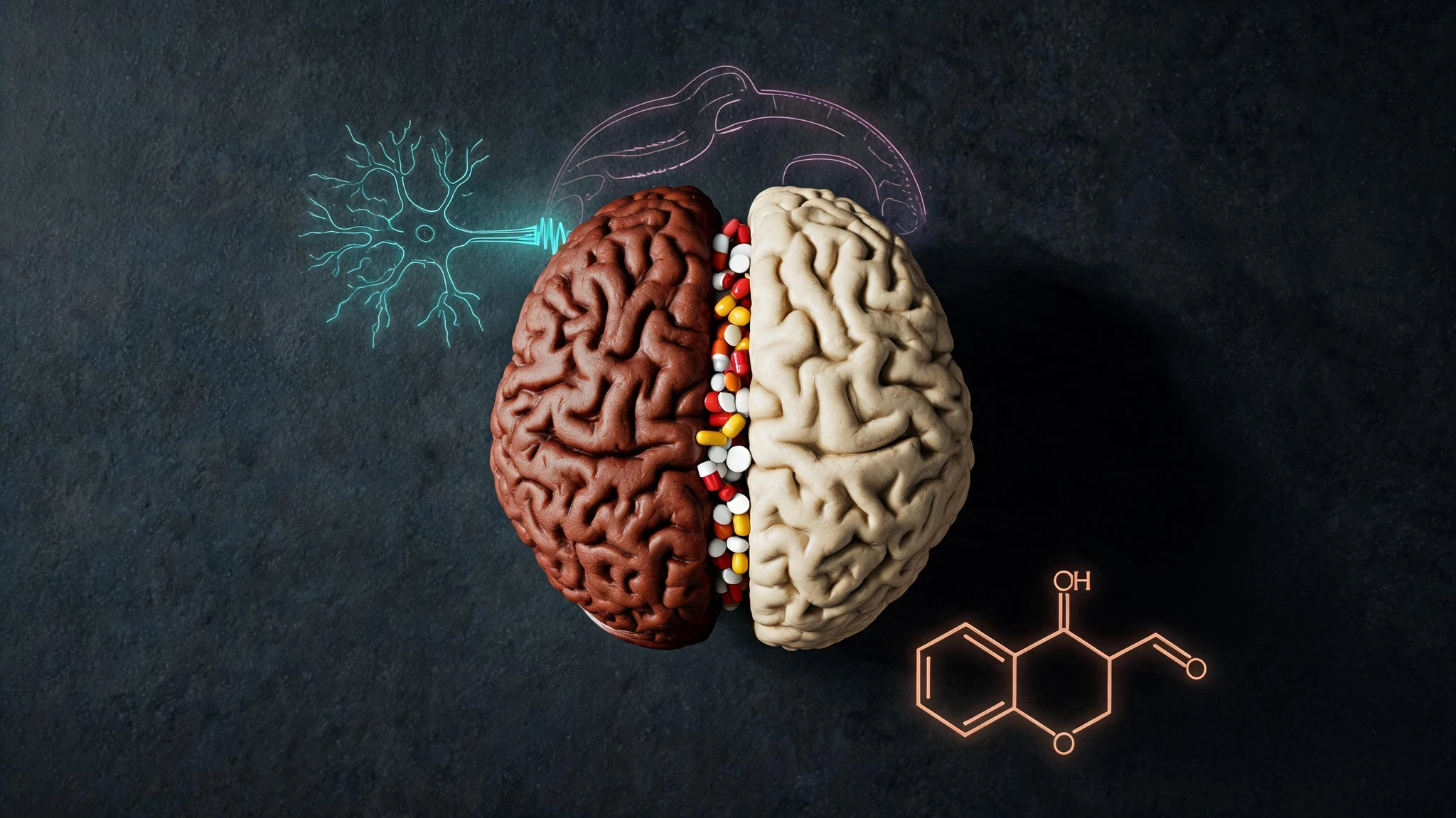
A team led by Ben Singh at the University of South Australia pulled together 97 separate review papers covering more than 128,000 participants and reached a conclusion that still surprises most family doctors. Across the pooled data, structured exercise programs reduced symptoms of mild-to-moderate depression, anxiety, and psychological distress about 1.5 times more effectively than the standard medication and talk therapy options those participants would normally have been offered.1 The paper landed in the British Journal of Sports Medicine in February 2023 and called for exercise to be treated as a mainline mental health treatment, not a footnote on the discharge sheet.
That is a strong claim, and the authors are careful with it. They are not saying you should drop your sertraline tomorrow. They are saying that on the same yardstick the drug industry uses, exercise comes out ahead in a lot of trials, and the effect is large enough that ignoring it has become hard to justify.1
What did the 2023 review actually look at?
Umbrella reviews are reviews of reviews. Singh and his colleagues went looking for every systematic review and meta-analysis published between 2011 and the end of 2022 that tested whether physical activity helped depression, anxiety, or distress in adults. They found 97 of them. Together those reviews covered 1,039 randomized trials and 128,119 individual participants, a sample large enough to flatten most quirks of any single study.1
The reported median effect size for exercise on depression was about a 0.43 standard deviation reduction in symptoms. For anxiety it was roughly 0.42. Those are not small numbers. As a comparison, recent reviews of antidepressant medication in similar patient groups land closer to 0.30, and reviews of cognitive behavioral therapy land in a similar zone. The 1.5x figure the authors quote in their press release comes from comparing those medians against meta-analyses of the standard care arms.1
It is not just one study
The Singh review sits on top of a deep stack of earlier work. In 2016, Felipe Schuch and colleagues published a meta-analysis of 25 randomized trials in the Journal of Psychiatric Research that tried to correct for the most common criticism of the field, namely that small underpowered trials with positive results get published while null results get filed away.3 Even after adjusting for that publication bias, exercise still produced a moderate-to-large antidepressant effect compared with control conditions. That paper is widely cited as the moment the literature stopped being dismissable.
Anxiety has its own evidence base. Brendon Stubbs and colleagues pooled six randomized trials of people with formally diagnosed anxiety or stress-related disorders in 2017 and reported a significant reduction in anxiety symptoms in the exercise arms compared with non-exercise control groups, with high-intensity programs outperforming low-intensity ones.4 A 2018 cross-sectional study of 1.2 million American adults, published by Sammi Chekroud and colleagues in Lancet Psychiatry, added population-level support: people who exercised reported about 43 percent fewer poor mental health days in the past month than people who did not, after adjusting for demographics and physical health.2
None of these papers say exercise is a magic bullet. They say the signal is real, it shows up in different study designs, and it does not vanish when you scrub the data harder.
Why does it work in the brain?
The mechanism question is where most readers get suspicious, because the popular answer is “endorphins” and the popular answer is also incomplete. Endorphins are part of the picture, but a 2019 review by Aaron Kandola and colleagues in Neuroscience and Biobehavioral Reviews lays out a much fuller list of how a brisk forty minutes on a treadmill changes the brain.5
Three pathways do most of the work. First, exercise raises levels of brain-derived neurotrophic factor, or BDNF. BDNF acts like a fertilizer for neurons in the hippocampus, the small seahorse-shaped region that handles memory and emotional regulation. The hippocampus is reliably smaller in people with chronic depression. Studies in animals and humans show that aerobic exercise increases hippocampal BDNF and slowly rebuilds hippocampal volume.5
Second, exercise nudges the monoamine system. Serotonin, dopamine, and noradrenaline all go up acutely during a workout and stay slightly elevated afterward. Antidepressants target the same neurotransmitters, just from a different angle. That overlap is one reason researchers stopped being shocked when exercise trials produced drug-sized effects.5

Third, and this one is newer, exercise lowers chronic inflammation. People with depression, on average, run higher levels of inflammatory markers like interleukin-6 and C-reactive protein than people without depression. Regular moderate exercise pulls those markers down. Whether that is part of why exercise lifts mood, or just a parallel benefit, is still being argued, but the correlation is robust across dozens of studies.5
Does the type of exercise matter?
This is one of the most useful findings in the Singh review, because it gives people a real choice. Aerobic exercise (walking, running, cycling), resistance training (lifting weights, bodyweight work), yoga, and mixed-modality programs all produced statistically significant reductions in depression and anxiety. No single style ran away with the result.1
Higher-intensity sessions did edge out lower-intensity sessions on average. A brisk hour-long walk beats a slow stroll, and a hard interval session beats both, at least in symptom-reduction terms. But the gap between high and low intensity was smaller than the gap between any exercise and no exercise. If your honest choice is between a 20-minute neighborhood walk and nothing, the neighborhood walk is the answer.1
Yoga sits in an interesting spot. It is technically lower intensity in cardiovascular terms, but it consistently outperforms its raw exertion level for anxiety. The mechanism is probably a mix of breath regulation, parasympathetic activation, and the same monoamine effects as any sustained physical practice.1

How long until it kicks in?
Here is where the 2023 review broke an old assumption. Most clinicians assume that exercise, like therapy or medication, takes months of consistency before benefits show up. The umbrella data pointed the other way.
Programs of 12 weeks or shorter produced the largest effects on depression and anxiety. Programs longer than 12 weeks tended to drift back toward the average, which the authors interpret as a mix of dropout, declining adherence, and possibly a ceiling on how much depressive symptom load any one intervention can shift.1 The takeaway is not that you should stop exercising after three months. It is that you should expect a noticeable mood shift well inside the first month, and you should not write the experiment off if six weeks in you still feel low.
Schuch’s earlier work pointed at the same pattern. Single sessions of moderate-intensity exercise produced an acute mood lift in clinically depressed patients within hours, and structured 8 to 12-week programs delivered durable changes in symptom scales.3 The body responds quickly. The hard part is showing up.
Who benefits most?
The Singh review highlighted three groups where the effect was unusually large. People with formally diagnosed depression saw bigger reductions than people with subclinical low mood, which is the opposite of what some skeptics expected. Pregnant and postpartum women, a group where medication options are more constrained, saw substantial improvements in depression and anxiety scores. And people managing chronic physical illness, including HIV, kidney disease, and cancer, saw mental health benefits that often outpaced the gains from their disease-specific care.1
Chekroud’s population study added a complementary detail. The mental health benefit per session peaked at 30 to 60 minutes, three to five times a week. Beyond that, more exercise stopped helping and very long sessions (over 90 minutes) were actually associated with slightly worse mental health days, possibly reflecting compulsive exercise patterns or overtraining.2 The dose-response curve is real, but it is not a “more is always better” line.

What about stress and the body’s alarm system?
One of the cleaner mechanistic stories involves the hypothalamic-pituitary-adrenal axis, the chain of glands that runs the body’s stress response. In chronic depression and anxiety, that axis tends to be stuck in a slightly overactive setting, dripping cortisol into the bloodstream long after the original stressor has passed.
Regular aerobic exercise appears to recalibrate the axis. After a few weeks of consistent training, cortisol responses to non-exercise stressors (a tough email, a difficult conversation, a missed deadline) become smaller and shorter. Kandola and colleagues argue this blunting is one of the most underrated reasons exercise feels protective: not that it removes stressors, but that the same stressors land softer.5

Stubbs’s anxiety meta-analysis fits the same pattern. Exercise did not just reduce reported anxiety scores, it also reduced physiological markers of arousal, including resting heart rate and self-reported tension during stress provocation tasks.4 The body learns the difference between a real threat and a manageable one.
Common questions about exercise and mental health
Is exercise actually as good as antidepressants?
For mild-to-moderate symptoms, the average effect size is in the same range as standard antidepressants and may be slightly larger, according to the 2023 umbrella review. For severe depression, exercise is best treated as a complement to medication and therapy, not a replacement. Always coordinate any change in treatment with the prescribing clinician.1
What is the minimum effective dose?
Population data suggests benefit starts at roughly 30 minutes of moderate activity, three times a week. The biggest gains in symptoms appear between 30 and 60 minutes per session, three to five sessions a week.2
Does walking count?
Yes. The umbrella review treated brisk walking as a legitimate aerobic intervention and found significant antidepressant and anxiolytic effects in walking-only trials. Pace matters more than mode: a steady walk that raises your breathing rate is doing the work.1
Will I feel worse before I feel better?
Most people feel a small acute lift after a single session. Some report a brief slump on rest days during the first two weeks, which usually resolves once the routine settles. If exercise consistently makes your mood worse, that is worth a conversation with your doctor rather than pushing through.
What if I cannot face a workout when I am low?
Start with a duration so small it feels embarrassing, ten minutes, five minutes, a single block around the corner. The activation problem is the hardest part of using exercise for mental health, and the research consistently shows that any movement beats the planned movement you skipped.
Where this leaves us
The Singh paper does not overturn psychiatry. It rearranges priorities. Antidepressants and talk therapy still work for the people they work for, and exercise still fails for some people who try it earnestly. What changed in 2023 is that the evidence got dense enough to stop calling exercise a “lifestyle adjunct” and start calling it a treatment. That matters because the way clinicians frame an option shapes whether patients try it. A “try this on the side” recommendation gets a different reception than “this is one of the three main things we know works for what you are dealing with.”
If you are weighing it for yourself, the practical version of the science is shorter than the science. Pick something you do not actively hate, do it three to five times a week for thirty to sixty minutes, lean into the harder sessions when you can, and keep showing up for at least six weeks before judging whether it helps. Talk to a healthcare provider before starting any new program, especially if you are managing a chronic condition, are pregnant or postpartum, or are currently on psychiatric medication. The brain that picked you up off the couch six weeks from now will not be quite the same brain that is reading this paragraph, and that is most of the point.
Sources
- Singh B et al. Effectiveness of physical activity interventions for improving depression, anxiety and distress: an overview of systematic reviews. British Journal of Sports Medicine, 2023. PubMed: 36796860
- Chekroud SR et al. Association between physical exercise and mental health in 1.2 million individuals in the USA between 2011 and 2015: a cross-sectional study. Lancet Psychiatry, 2018. PubMed: 30099000
- Schuch FB et al. Exercise as a treatment for depression: A meta-analysis adjusting for publication bias. Journal of Psychiatric Research, 2016. PubMed: 26978184
- Stubbs B et al. An examination of the anxiolytic effects of exercise for people with anxiety and stress-related disorders: A meta-analysis. Psychiatry Research, 2017. PubMed: 28088704
- Kandola A et al. Physical activity and depression: Towards understanding the antidepressant mechanisms of physical activity. Neuroscience and Biobehavioral Reviews, 2019. PubMed: 31586447