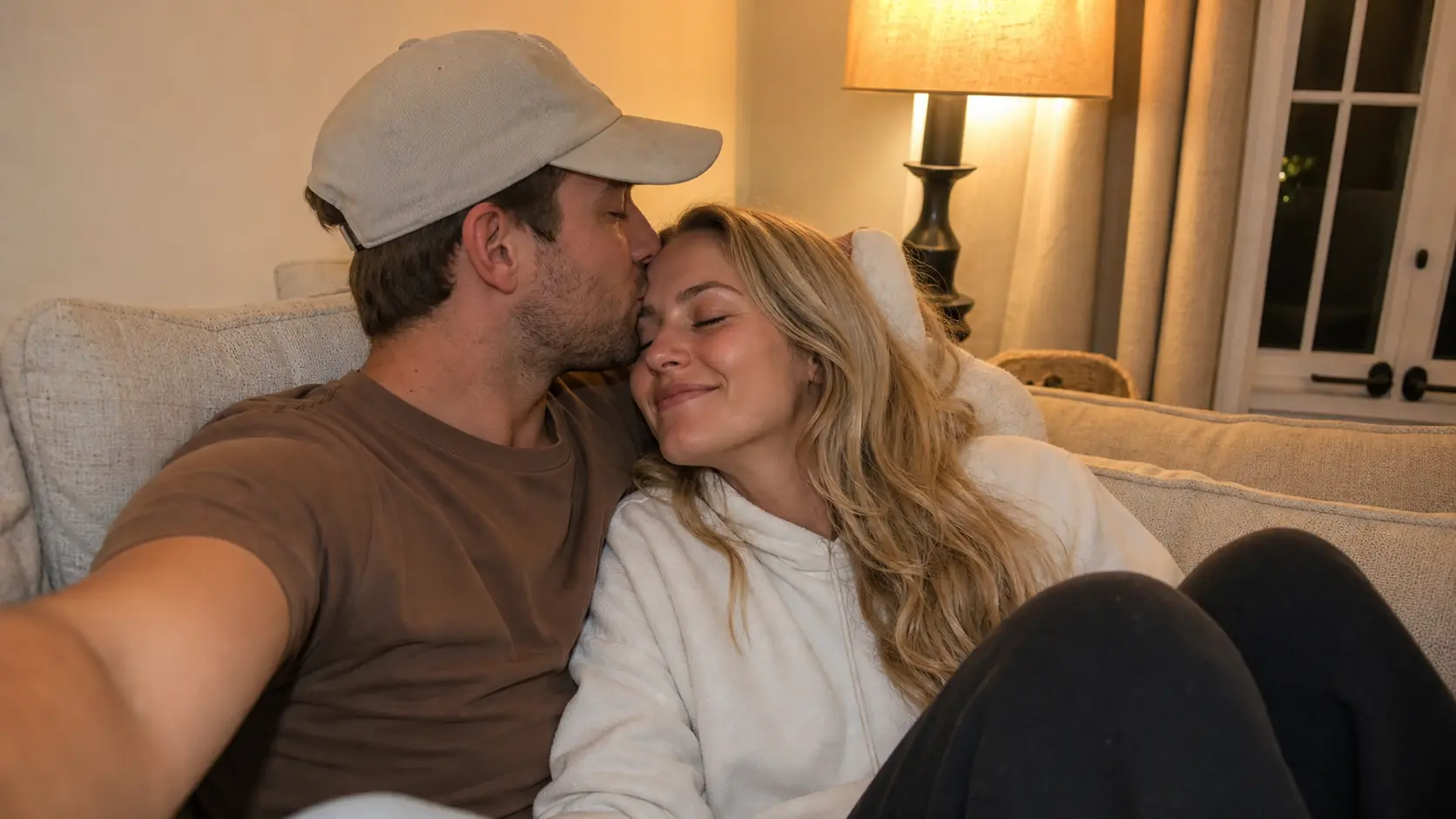
Spouses are far more likely than chance would predict to carry the same psychiatric diagnosis, according to a study of millions of married couples in Taiwan, Denmark, and Sweden published in Nature Human Behaviour in 2025 by Fan and colleagues.1 Across nine disorders, including depression, anxiety, ADHD, schizophrenia, bipolar disorder, autism, OCD, anorexia, and substance use, husbands and wives matched each other at rates well above what random pairing would produce, and the pattern held in three very different cultures and across multiple generations.
The same paper noted that this clustering was not a quirk of one country or one decade. The correlations showed up in Asian and Nordic samples that share almost nothing in common except being human, and they showed up in marriages from the 1930s and the 2000s alike. Couples, it seems, drift toward each other on the inside as well as the outside.1
What the new study actually found
Fan and colleagues pooled population registry data from Taiwan, Denmark, and Sweden, then looked at every legally married couple in which at least one partner had a recorded diagnosis for one of nine psychiatric conditions. The team calculated tetrachoric correlations, a statistical method that asks how strongly the presence of a trait in one person predicts its presence in the other, then compared those numbers against what you would see if people partnered at random.1
For most disorders the correlations were small but unmistakable. Schizophrenia, for example, showed a spousal correlation in the range of 0.1 to 0.4 depending on the cohort, which sounds modest until you remember that schizophrenia affects under 1 percent of the population. A correlation that size means a person with schizophrenia is many times more likely to be married to another person with schizophrenia than chance allows. Substance use disorders and ADHD also clustered tightly inside marriages. Anorexia nervosa was the one condition where the spousal signal was weakest, and in some cohorts barely measurable.1
The Taiwanese, Danish, and Swedish numbers tracked each other closely. That cross-cultural match is what made the paper newsworthy. If the pattern was just a quirk of one country’s healthcare system or one culture’s dating norms, the three should have looked different. They did not.
Why would couples end up with similar mental health?
Researchers usually point to three quiet forces, none of them dramatic on its own. The first is what behavioral geneticists call assortative mating, a term that just means people tend to pick partners who resemble them. We pair on height, on years of schooling, on political leaning, on personality, and apparently on the kinds of inner weather we find familiar. Someone with mild social anxiety may feel more at ease with another quiet person than with a stranger who fills every silence.
The second is shared environment. Once two people move in together, their lives narrow into the same kitchen, the same sleep schedule, the same circle of friends, and the same low-grade stresses. If one spouse drinks every night, the other is more likely to drink. If one stops exercising during a hard year, the other often drifts along with them. Lifestyle creep is not romantic, but it is real.
The third is social homogamy, a clunky word for an obvious idea. People meet inside their own neighborhoods, workplaces, churches, and schools. Those settings are not random. A graduate program clusters anxious overachievers. A trade union clusters people with comparable incomes and stress profiles. So the dating pool itself is pre-sorted before anyone says hello.

It is not just one study
The Fan paper landed inside a much larger pile of evidence about couples and concordant health, and that pile has been growing for at least a decade. A nationally representative analysis of Indian households published in PLoS Medicine in 2017 by Patel and colleagues found that for hypertension, diabetes, and elevated cardiovascular risk, the diagnosis of one spouse predicted the diagnosis of the other at rates well above chance, and the effect was strongest in older couples who had lived together longest.2
A 2024 follow-up in Scientific Reports by Varghese and colleagues took the Indian numbers further, looking at hypertension specifically across more than 50,000 married couples. Wives whose husbands had hypertension were significantly more likely to be hypertensive themselves, even after the researchers adjusted for age, education, body mass index, and household wealth. The authors argued that any screening program looking for high blood pressure should consider screening the partner at the same visit, because the yield would go up.3
For type 2 diabetes, a Dutch analysis from The Maastricht Study, published in 2021 by Silverman-Retana and colleagues, looked under the hood at risk factors rather than just diagnoses. They found spouses tracked each other on insulin resistance, fasting glucose, waist circumference, and physical activity. The correlations were not perfect, but they were consistent enough that the authors suggested couple-based interventions might do more than treating each person alone.4
So the new mental-health paper is not arriving in a vacuum. It is one more brick in a wall that says: couples are not two independent people sharing a roof. They are, statistically speaking, partly the same organism.

Where genes hide and where they don’t
One important caveat about spousal concordance: it is not the same as familial heritability. If two siblings both have ADHD, that probably reflects shared DNA. If two spouses both have ADHD, the explanation is mostly behavioral, because they did not grow up in the same household and they do not share a genome.
Some traits really are written in the family code, though, and the cleanest example is lipoprotein(a), a particle in the blood that drives heart-disease risk. Reeskamp and colleagues, writing in JAMA Cardiology in 2023, looked at relatives of people with high lipoprotein(a) levels and found that elevated readings clustered tightly inside biological families. About one in three first-degree relatives of an affected person also had the high lipoprotein(a) phenotype, which is why cardiology guidelines now urge “cascade screening”: if one person tests high, test the parents, siblings, and children.5
Spouses are not relatives. So if a married couple shares a high lipoprotein(a) level, that is a coincidence, not concordance. But if they share blood pressure, body mass index, depression, alcohol use, or a measured fasting glucose, the most parsimonious explanation is that they have spent years rubbing off on each other.
What this might mean for the way doctors check on couples
If health really clusters at the household level, the implication for primary care is small but specific: when one partner walks in with a new diagnosis, asking about the other partner is no longer just curiosity. It is a screening question. The Indian hypertension study made this point cleanly, suggesting that the partner of a newly diagnosed hypertensive patient should be offered a blood-pressure check at the same appointment.3 The Dutch diabetes study made the same case for fasting glucose and waist circumference.4
Mental health is harder to screen casually, and it is fair to be cautious about how to use the Fan finding. The last thing anyone needs is a primary-care doctor saying “your husband has depression, so let’s check you for it” inside a five-minute visit. But the underlying logic is similar. If one person in a marriage is being treated for depression or anxiety, the other person is at higher-than-baseline risk, and that risk is worth knowing about.1

How long does the effect last?
One striking detail in Fan and colleagues’ paper is that the spousal correlations did not vanish with time, geography, or generation. They held up in marriages registered in the 1930s. They held up in marriages registered in the 2000s. They held up in Taipei, in Stockholm, in Copenhagen.1 That stability suggests the underlying causes, whatever the relative weight of mate selection versus shared environment, are not specific to a particular dating culture or a particular century. They are something close to a feature of human partnership.
For physical traits, the effect appears to grow with the number of years a couple has lived together. The Indian household analysis found stronger concordance in older marriages than in newer ones, suggesting a shared environment effect that builds slowly.2 For psychiatric traits, mate selection probably does most of the work up front, then shared environment fills in the rest over decades.
What this is not
This is not a story about contagion. Depression is not the flu, and a partner does not “catch” anxiety the way they catch a cold. The original Facebook caption that prompted this article borrowed the word “infect,” which is catchy but inaccurate, and it is worth retiring. What the data actually show is correlation, not transmission. Two people who share a kitchen, a calendar, a bed, and a worldview will, on average, share more of their measurable health than two strangers will.
It is also not a story about destiny. The correlations in the Fan paper are real but small in absolute terms. Most spouses of people with a psychiatric diagnosis do not themselves carry that diagnosis. The increase in risk is on the order of a percentage point or two, not a doubling. Plenty of people in long marriages stay healthy while their partner is sick, and vice versa. Statistics about populations do not tell any one couple what their next ten years will look like.
And it is not a story about blame. Nobody made anybody depressed. Nobody chose their partner because of an undiagnosed gene. The honest framing is gentler than that: people who pick each other tend to be alike, and people who live together tend to grow more alike, and a few of the things they grow alike on are health.

Common questions about spousal health concordance
Do couples really share mental disorders, or are they just both diagnosed because they go to the same clinic?
The Fan study used population-wide registries that capture diagnoses across many providers, not just one clinic, and the correlations held up across three different healthcare systems. Surveillance bias is unlikely to explain a pattern that consistent.1
If my partner has depression, what is the chance I’ll develop it too?
Higher than the population average, but still low in absolute terms. Spousal correlations in the Fan paper translate into a few extra percentage points of lifetime risk, not a doubling. A clinician’s input matters more than any number from a registry study.1
Does this mean dating someone who is healthier will make me healthier?
The data are correlational, so caution is warranted. That said, shared exercise, shared meals, and shared sleep schedules do seem to drag both partners in the same direction over time, which is exactly why couple-based lifestyle interventions are being studied for diabetes and blood pressure.3,4
Why was anorexia the weakest signal?
The authors don’t have a definitive answer, but anorexia is rare and overwhelmingly diagnosed in women, which limits how often it can co-occur in a married couple at all. The statistics simply have less to work with.1
What should I actually do with this information?
If your partner is being screened or treated for a chronic condition, mention it at your own next checkup. The point is not to alarm anyone. It is to make screening a household question rather than an individual one.
Where this leaves us
The cleanest way to read the Fan paper is to treat it as a quiet correction to a popular fiction. We tend to think of our health as personal property, something we own alone and manage alone. The data say otherwise. Marriages are health environments, and the people inside them are partly downstream of each other’s habits, moods, and biology.
None of that should change how anyone falls in love. It might, modestly, change how doctors take a history and how couples talk about exercise, sleep, drinking, and stress. The body of evidence is not telling anyone to leave a partner or pick a different one. It is telling clinicians, and the rest of us, to stop pretending that health stops at the bedroom door.
Sources
- Fan CC et al. Spousal correlations for nine psychiatric disorders are consistent across cultures and persistent over generations. Nature Human Behaviour. 2025. PubMed: 40877398
- Patel SA et al. Chronic disease concordance within Indian households: A cross-sectional study. PLoS Medicine. 2017. PubMed: 28961237
- Varghese JS et al. The association of hypertension among married Indian couples: a nationally representative cross-sectional study. Scientific Reports. 2024. PubMed: 38710852
- Silverman-Retana O et al. Spousal concordance in pathophysiological markers and risk factors for type 2 diabetes: a cross-sectional analysis of The Maastricht Study. BMJ Open Diabetes Research & Care. 2021. PubMed: 33597186
- Reeskamp LF et al. Concordance of a High Lipoprotein(a) Concentration Among Relatives. JAMA Cardiology. 2023. PubMed: 37819667