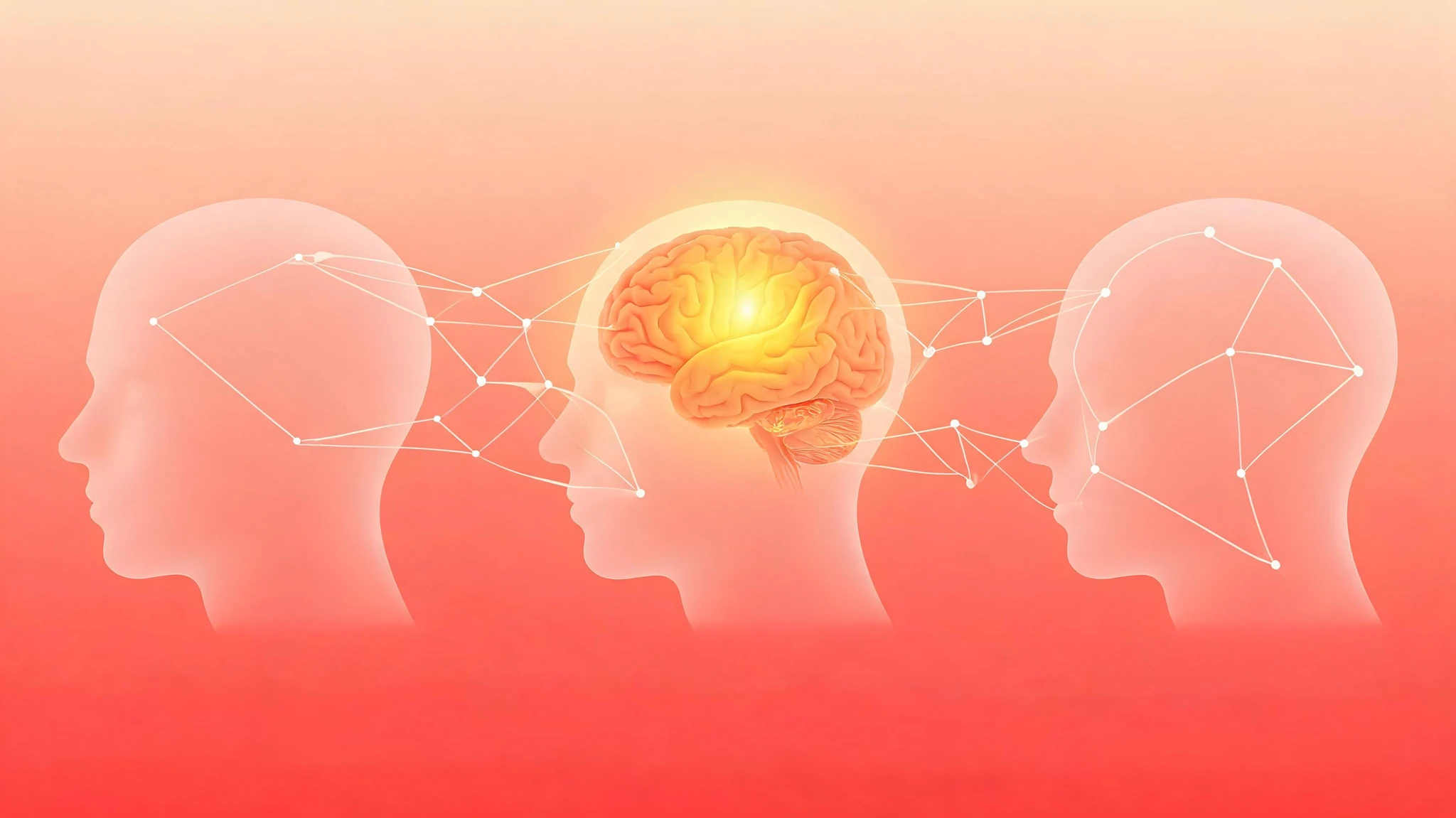
Chronic, unmanaged stress appears to shrink parts of the brain most responsible for memory and self-control, while challenges you choose, like learning a language or picking up an instrument, appear to grow new connections in those same regions. That distinction is the throughline in two decades of work from researchers like Bruce McEwen at Rockefeller and Sonia Lupien at the University of Montreal, whose 2007 and 2009 reviews remain anchor texts for how scientists describe stress and the brain.1,2
The wellness slogan that “stress makes your brain stronger” gets the biology backwards. Difficulty you can absorb, recover from, and direct toward a goal is what stretches neural circuits. Difficulty you cannot escape, the kind that lingers across months of unpaid bills or a bad job or unprocessed grief, does the opposite. The two are not on a sliding scale. They are different beasts.
What people get wrong about “stress” in the first place
The word stress is doing a lot of work in everyday conversation. We use it for the buzz before a presentation, the tightness of a hard week, and the slow grind of caring for a sick parent. Neuroscientists pull these apart. They distinguish acute stress, which is short, intense, and usually resolves, from chronic stress, which is prolonged and feels inescapable. They also separate eustress, a positive arousal you can channel, from distress, an aversive load you cannot offload.1
Most of the wellness internet collapses these into one word and then markets the spike. The line you have probably seen, that stress makes your brain stronger, borrows from research on hormesis, where small doses of a stressor produce an adaptive response. That principle is real for muscles and for some metabolic systems. It is much messier for the brain, where the same stress hormones that help you focus during a fire alarm can erode tissue when they stay elevated for months.
Why chronic stress shrinks the hippocampus and prefrontal cortex
The brain region most studied here is the hippocampus, a seahorse-shaped structure tucked behind your ears that handles memory and spatial navigation. Lupien and colleagues, reviewing several decades of human and animal data, describe how prolonged exposure to glucocorticoids, the family of stress hormones that includes cortisol, is associated with hippocampal volume loss and impaired memory performance.2 The prefrontal cortex, which sits just behind your forehead and runs planning, decision-making, and impulse control, shows similar vulnerability.1,2
The mechanism is not mysterious. McEwen frames it as allostatic load, the cumulative wear on the body and brain when stress responses run too often or fail to shut off.1 Neurons in stress-vulnerable regions retract their dendrites, the branchlike extensions that receive signals from other cells. Synapses, the points where neurons connect, become fewer and weaker. Levels of brain-derived neurotrophic factor, or BDNF, a protein that helps neurons survive and grow, tend to fall under sustained stress. The brain does not collapse all at once. It quietly thins.

None of this means a stressful month rewrites you. The brain is plastic in both directions. Recovery is part of the same story, and a single hard stretch is not the same as a decade of it. The reviews are clear that intensity, duration, controllability, and predictability all change the outcome.2
What “adaptive neuroplasticity” actually looks like
Plasticity is the brain’s capacity to change its wiring in response to experience. It is not a wellness buzzword. It is the property that lets a stroke survivor relearn to speak, lets a violinist’s fingers map onto cortex, and lets you remember the layout of a new apartment after a few days. The everyday version is humbler than the slogans. You are not unlocking superpowers. You are reinforcing pathways you use and pruning the ones you do not.
Researchers describe two flavors of this process. Adaptive plasticity strengthens circuits that serve you, builds new ones in response to novel demands, and supports learning. Maladaptive plasticity reinforces patterns that hurt you, like the rumination loops in chronic anxiety, or the hypervigilance circuits in post-traumatic stress.2 The brain does not know which kind it is doing. It just gets better at whatever you keep asking it to do.
That is why the choice of challenge matters. A guitar lesson, a Spanish app, a hard hike with a map you have to read, all of these recruit attention, motor planning, memory, and reward circuits in ways the brain reads as productive load. The reward part is not decorative. Dopamine release during voluntary effort seems to be one of the signals that tells the brain a circuit is worth keeping.
Why “challenge you choose” is biologically different from “stress that overwhelms you”
The phrase the source post uses, “a challenge you choose is not the same as stress that overwhelms you,” lines up with the research literature better than most viral wellness lines. Two factors do most of the work in deciding which side of the line a hard experience falls on, and both come up repeatedly in the stress literature: control and recovery.1,2
Control means you set the pace, the volume, and the exit. You can stop the language lesson when you are tired. You can put the guitar down. You can take a rest day from the half-marathon plan. Constant work pressure or unrelenting anxiety does not give you that handle. The unpredictability and lack of control are exactly what flips an arousing challenge into a corrosive load.
Recovery means the body returns to baseline between bouts. Cortisol comes down. Heart rate variability comes back. You sleep. The brain consolidates the day’s learning during deep sleep and dreaming, which is part of why people who do not sleep enough struggle to retain new skills. Without recovery, the same hours of “challenge” turn into wear without growth.

This is also why the same activity can land differently for two people. A demanding new role at work is a chosen challenge for someone who feels supported and well-rested. It is a chronic stressor for someone whose home life is already stretched and whose sleep is broken. The neurobiology is similar. The context decides which way the brain bends.
What the evidence actually supports for healthy brain change
Four practices show up again and again in the literature on brain-friendly behavior, and the evidence varies in strength across them.
Aerobic exercise has some of the cleanest data. In a year-long randomized trial led by Kirk Erickson at the University of Pittsburgh, older adults who walked briskly three times a week showed an increase of about two percent in hippocampal volume, while a stretching control group showed about a one and a half percent decrease. Memory performance tracked the volume changes, and BDNF served as one of the candidate mediators.3 A broader review by Hötting and Röder concluded that physical exercise produces measurable benefits across attention, processing speed, and executive function, with stronger effects when training is sustained and aerobic in nature.4
Learning new skills is the second pillar, and the lab evidence is consistent: motor learning, language learning, and complex hobbies are associated with structural changes in the cortex within weeks. Hötting and Röder also note that combined cognitive and physical training tends to outperform either alone, which is one reason a hike with a map probably beats a treadmill on autopilot.4

Mindfulness practice is the third, and here the evidence is real but more cautious. A review by Yi-Yuan Tang, Britta Hölzel, and Michael Posner pulled together imaging and behavioral findings showing that meditation training is associated with changes in attention networks, body awareness, emotion regulation, and self-referential processing, with structural shifts reported in regions like the anterior cingulate, insula, and hippocampus.5 The authors are careful: many studies are small, methods vary, and not every published effect has held up.
Recovery, the fourth pillar, is the least flashy and probably the most underrated. Sleep, social connection, and time outside are not romantic, but they are how the nervous system returns to a state where the other three practices can do anything. Without them, you are layering effort onto a tired system and getting maladaptive plasticity for your trouble.1,2
How long do these changes take, and how long do they last?
For exercise-driven hippocampal changes in older adults, Erickson’s team measured volume after a full year of brisk walking, with significant differences from controls at six months as well.3 For meditation, structural changes have been reported after eight-week mindfulness-based stress reduction programs, though replications vary.5 Skill learning shows cortical changes on a much faster timescale, within days to weeks, when practice is daily and effortful.
Reversal is part of the picture too. Stop training, and gains tend to fade. Resume the chronic stressor, and the hippocampal volume that recovered after a calm period can shrink again. The brain you have is, to a meaningful degree, the brain you are currently using.

What this means for the average person who is already busy and tired
The honest version of this advice is unglamorous. You do not need to overhaul your life. You probably need to subtract one chronic stressor and add one chosen challenge that you find slightly absorbing. Then protect sleep. Then move your body in a way you can sustain. The compounding is slow and quiet, which is why most marketing skips it.
It is also worth saying what this is not. None of this is a cure for clinical depression, anxiety disorders, or PTSD. People with those conditions deserve real care, often including therapy and sometimes medication, and the plasticity literature is exactly why those treatments work: they shift circuits over time. If you suspect you are past the threshold of self-management, treat that as information, not failure.
Common questions about stress, challenge, and the brain
Is short-term stress good for the brain?
Short, controllable bursts of arousal seem to sharpen attention and learning in the moment, partly through dopamine and norepinephrine. The trouble is duration and control, not intensity, so a tough workout or a hard exam differs from a six-month bad work situation.1
Does cortisol damage the brain directly?
Cortisol itself is necessary and helpful at normal levels. The damage profile is associated with chronically elevated levels and disrupted feedback, where the system that should turn cortisol off stops working efficiently.2
How quickly can the brain recover after a stressful period?
Animal and human evidence suggests partial recovery within weeks to months once the stressor ends and recovery practices return, though severity and duration of the original stress matter.1,2
Is meditation as effective as exercise?
The two affect different but overlapping circuits. Exercise has stronger evidence for hippocampal volume and cardiovascular benefit; meditation has more evidence for attention and emotion regulation. Most people benefit from a little of both rather than choosing.3,5
Can older adults still grow new connections?
Yes. Erickson’s trial was specifically in older adults aged 55 to 80, and the hippocampal increase was real and measurable. Plasticity slows with age, but it does not stop.3
Where the science leaves us
The cleaner reading of two decades of work is this: the brain rewards effort that you direct, can recover from, and care about, and it pays a quiet price for effort imposed on you with no exit. None of the headline wellness slogans capture that, because the truth does not fit on a graphic. Choose challenges. Drop a stressor where you can. Sleep. Move. Pay attention to what you are practicing, because your brain is taking notes either way.
That is less satisfying than a single trick. It is also closer to what the studies, taken together, actually say. Results vary by individual, brain health depends on many interlocking factors, and no single approach works the same for everyone. The pattern in the data, though, has been remarkably stable for a long time now.
Sources
- McEwen BS. Physiology and neurobiology of stress and adaptation: central role of the brain. Physiological Reviews, 2007. PubMed: 17615391
- Lupien SJ, McEwen BS, Gunnar MR, Heim C. Effects of stress throughout the lifespan on the brain, behaviour and cognition. Nature Reviews Neuroscience, 2009. PubMed: 19401723
- Erickson KI et al. Exercise training increases size of hippocampus and improves memory. Proceedings of the National Academy of Sciences, 2011. PubMed: 21282661
- Hötting K, Röder B. Beneficial effects of physical exercise on neuroplasticity and cognition. Neuroscience and Biobehavioral Reviews, 2013. PubMed: 23623982
- Tang YY, Hölzel BK, Posner MI. The neuroscience of mindfulness meditation. Nature Reviews Neuroscience, 2015. PubMed: 25783612